Gwreiddiau’r Galon
Roots of the Heart
I have walked across all of Innatraea. Stood in Tursim’s golden markets, slept under the Tanglewood’s dark canopy, listened to Am’Ayim singing of Di Saalt, and even watched Shedon feel in colors no words can hold. But of all the places my feet have carried me, none stayed in my heart the way Cathyor has. Perhaps because by the time I arrived, so much of it was already gone.
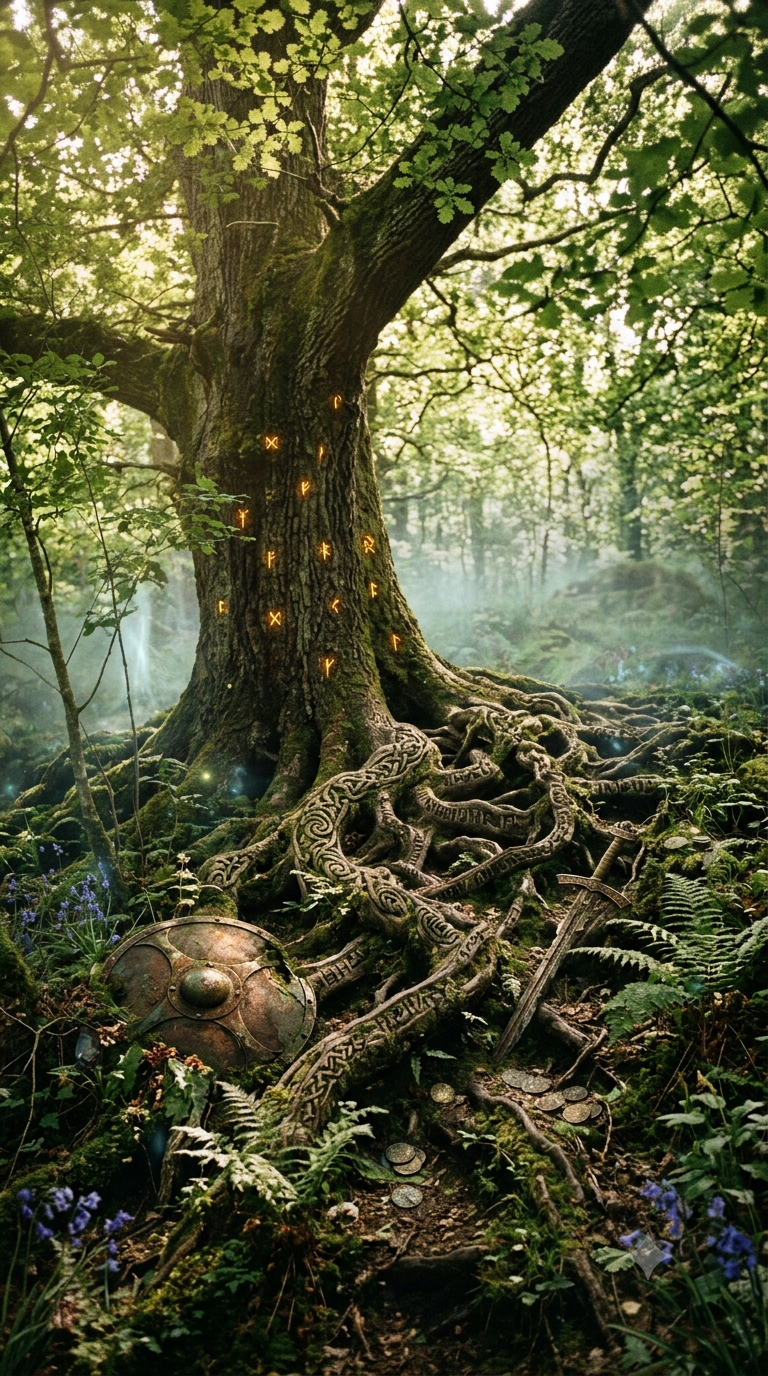
You will not find Cathyor on the maps they draw in Bethseda. The Aedonians erased it, folded its hills and forests into their own borders as though a kingdom could simply be unwritten. But the land remembers. Walk the old roads northeast of the Victory River, where the forests thicken and the oaks grow broad enough to shelter a whole family beneath a single branch, and you will feel it. There is a stillness in those woods that isn’t silence. The trees are listening, and if you are quiet enough, and your heart is open, you will understand that you are not alone amongst them.
I came to Cathyor because of the stories. A kingdom where their king bowed to no one, yet understood the true strength of his people rested in the hands of its women. A place where warriors were bonded to titans of the forest, language itself was considered sacred—spoken not just to be heard, but to honor. I came expecting ruins and sorrow. I found both of those, but there were also things I hadn’t expected.
The roots were still there—deep in the ground, alive, and remembering.

Y Tir
The Land
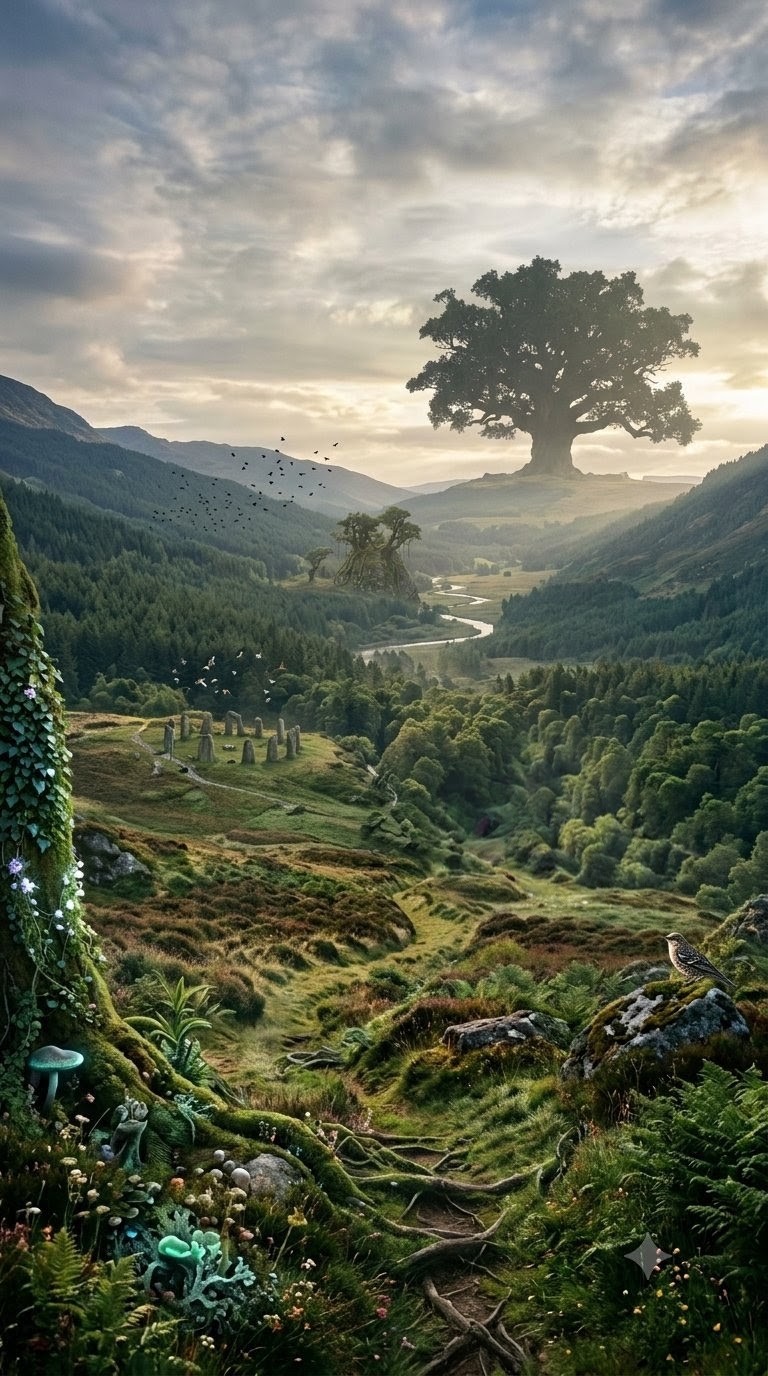
Cathyor was a kingdom of forests and hills, mist rising from still water at dawn and oak canopies so thick the light came through in shafts, like fingers reaching for Innatraea. It sat in the heart of what Aedonia now claims as its eastern territories, northeast of the Victory River, bordered by deep forests to the north and the rolling farmland that stretches south toward the Rinowhn Tribelands and Royal Seyla. It was never a large kingdom. It did not need to be. What Cathyor held was with roots, not borders.
The land itself is old in a way that most kingdoms aren’t. You feel it in your feet—a heaviness in the soil, as though the ground has been holding its breath for a very long time and has no intention of letting go. The Great Trees here are numerous, their trunks wide enough to house castles, their branches stretching over clearings like the arms of a keeper. Gwydir Wood, the most ancient of Cathyor’s forests, is a place where even the wind moves differently. It does not rush. It circles, as though looking for someone it remembers.
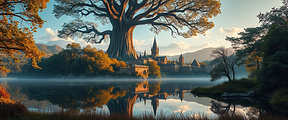
Brynn, their capital, was built on the shores of Lake Rhiannon, named for the goddess herself. Even now, after everything the Aedonians did to it, you can see what it was. The city rose from the water’s edge in warm stone, spires and towers catching the light above the treeline, the lake so still at dawn that Brynn’s reflection seemed as real as the city itself. A great oak stood over it all, older than the kingdom, older than memory, its branches reaching across the rooftops as though sheltering the whole of Cathyor beneath a single tree. On autumn mornings, when mist crept off the water and the leaves burned gold and copper, it was said that Brynn looked like a place dreamed rather than built—a city that had grown alongside the forest rather than being placed upon it.
What I remember most is the stillness. Not emptiness—Cathyor was never empty. But a quality of peace that felt earned, as though the land and the people who lived upon it had come to an understanding a long time ago, to take care of each other.
Yr Hen Iaith
The Old Tongue
Most kingdoms speak to be understood. The Cathyoran spoke to honor. Their language, what they called the old tongue, was not merely a way of communicating—it was an act of reverence, woven so deeply into who they were that to hear it spoken was to understand the Cathyoran heart in a way no translation could carry.
I have heard many tongues across Innatraea. The Am’Ayim speak with the rhythm of water, the Tursi with the weight of order, and the Danae speak as they move, every word a gesture. But Cathyoran is the only language I have heard that sounds like it belongs to the land itself, as if the words grew out of the same soil as their forests. When a Cathyoran woman spoke the old tongue in prayer, the air around her seemed to change. When a soldier spoke it before death, you understood that he was not asking for mercy. He was making a promise.
The Aedonians tried to stamp it out, of course. They always do, with languages that carry power they cannot control. But you hear it, if you know where to listen. In the deep woods where survivors gather. In the whispered farewells of women who remember. In the old sayings that even Aedonian farmers repeat without knowing where they came from. “Mae’r gwynt yn siarad wrth y rhai sy’n gwrando.” The wind speaks to those who listen.
It still does.
Y Bobl a’u Ffyrdd
The People and Their Ways
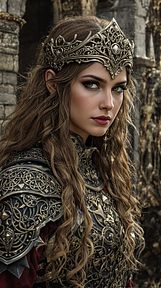
The Cathyoran were a proud people, rooted deep. They kept their word, carried themselves with honor, stood for each other, and even their simplest farmer understood that courage was life. A Cathyoran who made a promise kept it, or died trying. There was no middle ground.
Their salute was two fingers pressed to the heart. Not a bow, a kneel, or an elaborate gesture of submission. A touch to the chest—I am here, my heart is true, I stand with you. Soldiers gave it to their commanders. Servants gave it to the women they served. Men gave it to their wives. I watched a line of guardsmen give it to a girl no older than ten, and every one of them meant it.
The relationship between men and women was unlike anything I have encountered elsewhere. In most kingdoms, power flows one direction and everyone pretends otherwise. In Cathyor it was simply understood. The king ruled, the crown was his, and no man of Cathyor bowed his head in shame for being a man. But the true strength of the kingdom—the bonds, the sacred power, the connection to the Great Trees and Dryads—belonged to the women, and the men honored it.
Cathyor is gone. But you cannot burn devotion out of a people, and the ones who carry it are out there, keeping their word.
Ty Ahearne a’r Goron
House Ahearne and the Crown
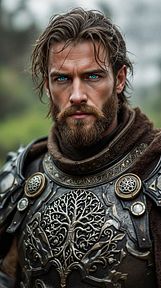
House Ahearne ruled Cathyor for generations, and was loved, because their sole ambition was to serve the Cathyoran people, not themselves.
An Ahearne king sat on the throne, held the crown, led in war, and answered for his people. But he also knew that the deepest power in Cathyor wasn’t his to wield. It belonged to the women, to Trefn Cyfiawnder, and Innatraea herself.
Their sigil was the horse, and every firstborn son of the house was marked with it—a horse head shaped mark upon the skin, given at birth. The Ahearne family sword, Dygwr Tynged—“Fatebringer”—was unique amongst all the blades of Trefn Cyfiawnder, because it could be wielded by a man of the Ahearne bloodline. Every other sacred blade belonged to the women alone.
The last king was Cormac, son of Taran. Those who knew him speak of a man who laughed easily, loved fiercely, and understood his place in the world without needing to be reminded. He married Isolde, who was not only his queen but one of the most powerful women Trefn Cyfiawnder had ever known. Their son, Cian, was born shortly before the fall. A prince heir whose fate remains unknown to this day. Some say the boy was killed with his parents. Others whisper that he was carried to safety and lives, somewhere beyond Aedonia’s reach. No one knows for certain. But I have noticed that when survivors speak of Cian, they do not speak of him as dead, but in the way you speak of someone you are waiting for.
Cormac’s final act, I am told, was not a charge for glory or a last desperate bid for survival. It was sending others away to live. He stayed and held the line so that what he loved—his son, his people, their future—could survive him.
Trefn Cyfiawnder
The Order of Justice
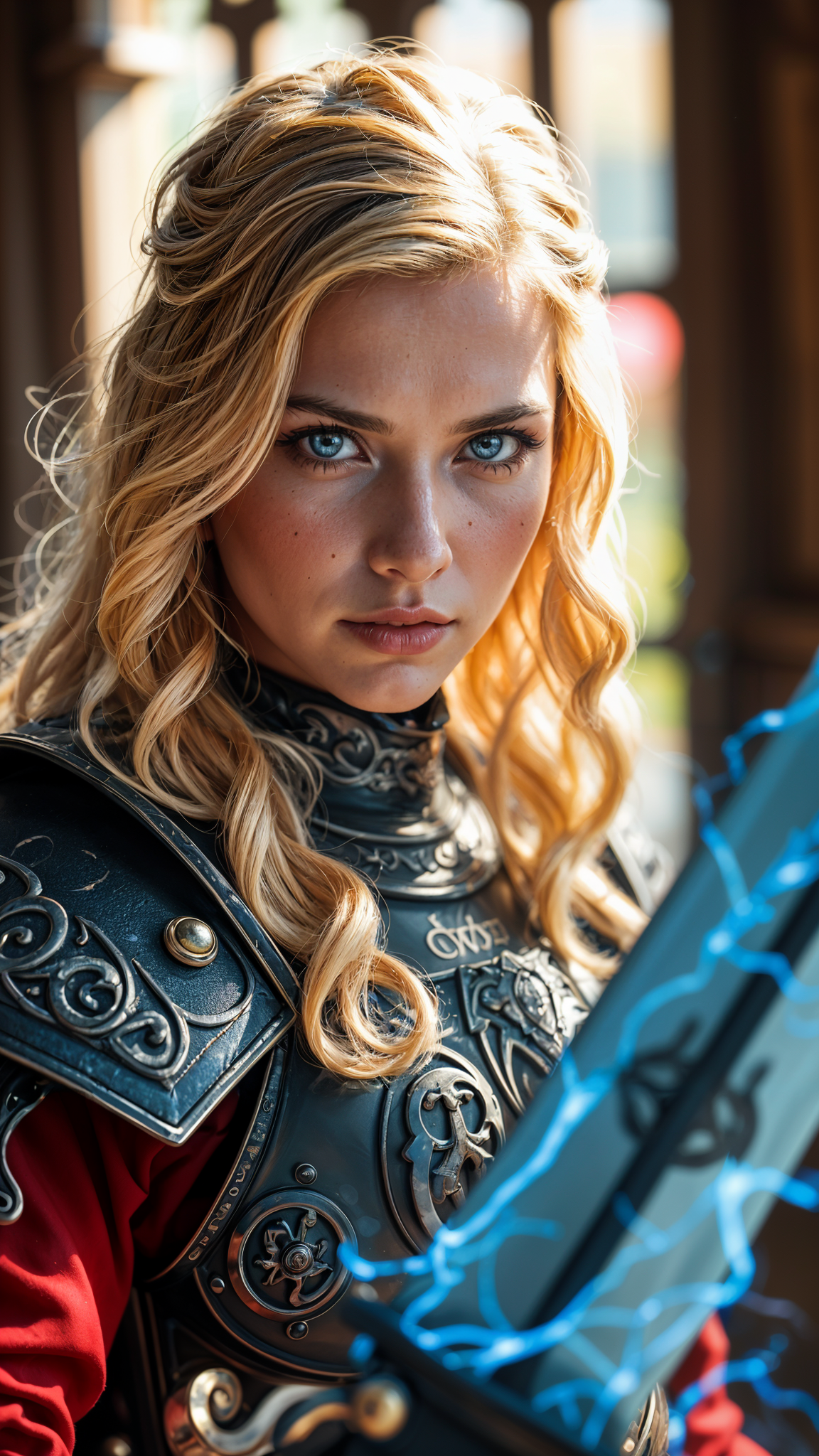
Trefn Cyfiawnder was the heart of Cathyor. An order of women knights whose origins trace back through history to bloodlines connecting them to Innatraea’s Dryads. They were universally feared, so much that many other kingdoms refused to engage with Cathyor at all. Each woman in their ranks was said to wield a magical sword of great power and possess the ability to turn invisible in battle.
The foundation of their power was the Cyfeillach Gysegredig—the Sacred Bond—a lifelong connection between each woman of the order and the Dryad who chose her. Through this bond a woman became more than she had been before. Not elevated above her humanity, but deepened into it. The bond gave her power—strength, speed, and a magical sword that answered to her will—but it also gave her responsibility. A woman of Trefn Cyfiawnder was no longer only herself. She became part of Coedwig Amser, the Forest of Time, where the blood of every ancestor flows and connects like roots through the eons.
The swords of Trefn Cyfiawnder were as individual as the women who carried them. Each blade had its own nature, name, and power. Some fed on the blood of enemies. Others required sacrifice—a woman’s own blood drawn to summon the blade. Some were forged steel and old magic, others formed from the living wood and vines of Innatraea herself. No two were alike.
They were known for their loud bravado, unflinching honor, reckless courage, and above all, for never breaking their word. A promise from a woman of Trefn Cyfiawnder was the most binding thing on Innatraea. “Marw yn dda chwaer, oherwydd buoch fyw yn ddewr.” Die well sister, for you have lived with courage. It was their farewell to each other, and it was never spoken lightly.
Y Dryad a Kanraphim
The Dryads and the Spirit World
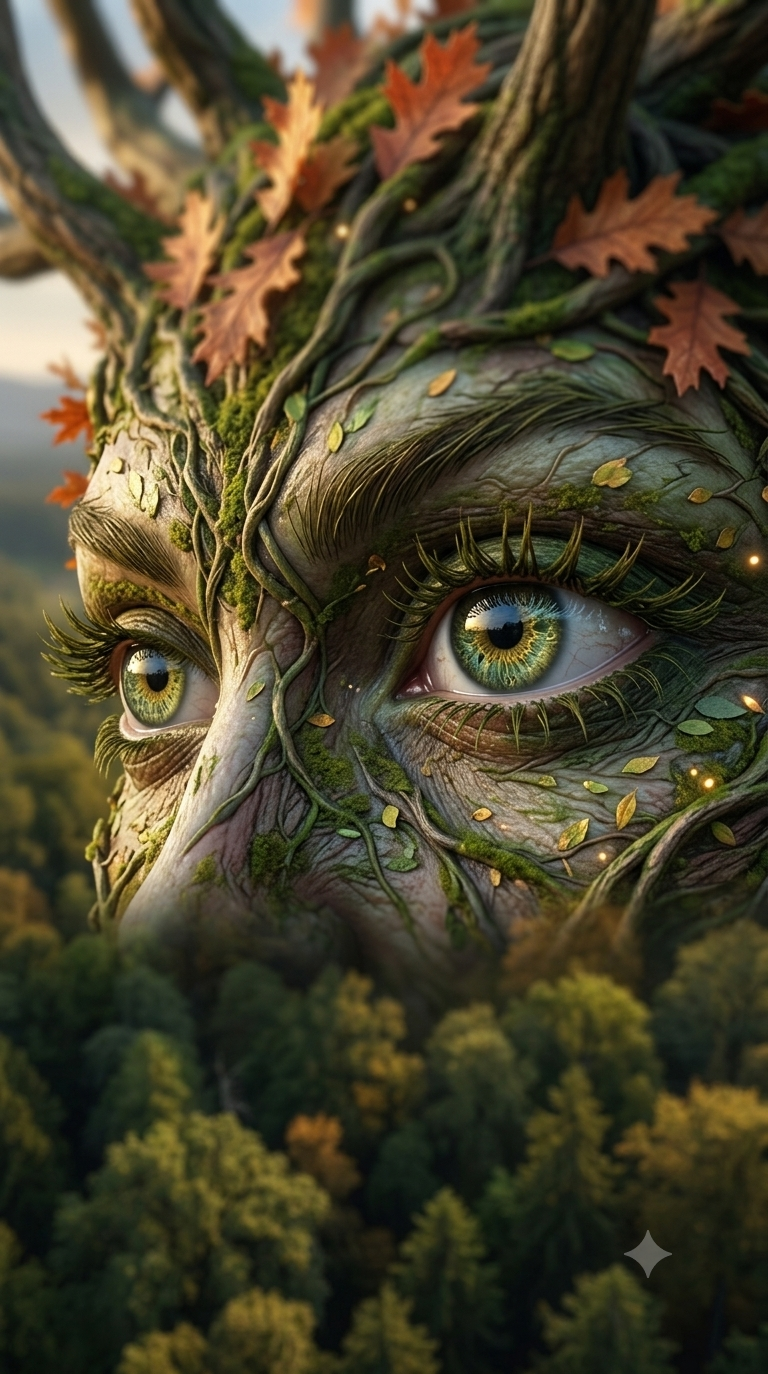
I have seen many things across Innatraea that most would call impossible. But nothing compares to the Dryads. Standing in their presence, you understand that Innatraea is far older, stranger, and more alive than we believe—and no story can prepare you for it.
They are titans. Feminine in form, taller than the treeline, with hair woven from leaves, roots, and living vine. Their hands are traced with plants that glow as if lit from within, and their eyes—vast, shimmering between green and purple and amber—see things no Innatraean ever could. When a Dryad moves, the forest moves with her, branches creaking and wind stirring as though Innatraea herself is there, conscious, in that moment.
Dryads are not goddesses, but Sacred Folk, one of the many magical races that have existed across Innatraea since before our time. These feminine titans are guardians, partners, keepers of a balance between worlds that most Innatraeans do not even know exist.
Kanraphim—the spirit world—is the world most Sacred Folk are from, including the Dryads. It borders Innatraea the way a reflection borders the thing it mirrors. Those who have been taken there describe it as familiar yet changed—the same forests and hills, but everything carrying a soft glow, lit from the inside. Time moves differently in Kanraphim. Moments there can stretch while the world outside holds still.
The Dryads are out there, in the deep forests, the places the Aedonians don’t dare to go. They are patient the way only the old can be. They remember everything, and they are waiting.
Rhiannon a’r Cysegredig
Rhiannon and the Sacred
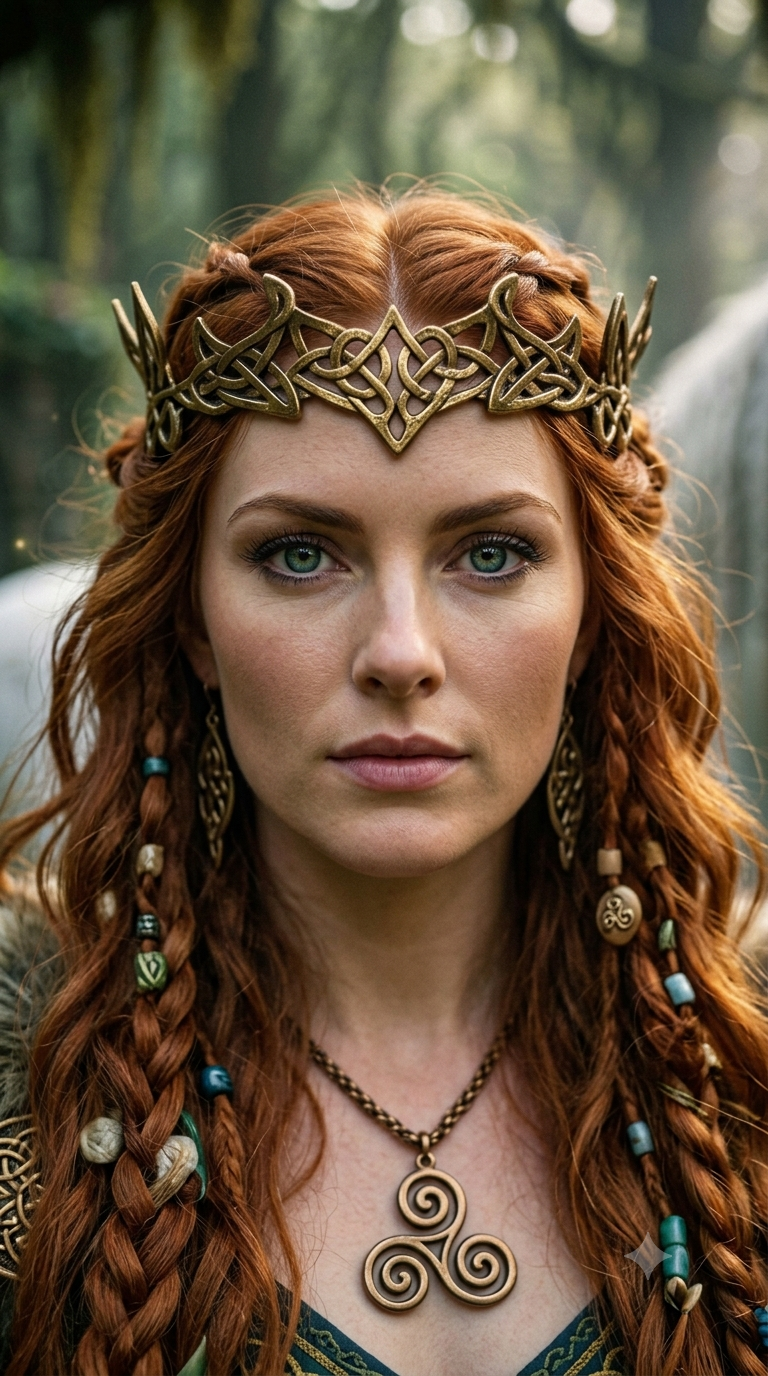
Innatraea has three sister goddesses, the daughters of Asherah—Rhiannon, Selene, and Serafina—each one a moon in the sky, vast and old, visible to every Innatraean at night. But Cathyor belonged to Rhiannon, the Great Horse Queen, goddess of the moons, wealth, power, and fertility. She was their mother, protector, the name on their lips when they prayed and when the breath died.
Cathyoran worship was quiet, and its quiet made it sacred. There were no grand ceremonies performed for an audience, no elaborate rituals meant to demonstrate devotion. Rhiannon was not someone they performed obedience for. She was someone they spoke to—constantly, like breathing.
Their most common gesture of blessing was simple and beautiful. A kiss pressed to the fingertips, then those fingers touched to the chest of another. No words were required, though they were often spoken. It meant—my love goes with you, Rhiannon watch over you, I give you what I have.
Faith and life were not separate things in Cathyor. The sacred was not kept in temples or reserved for holy days. It lived in the forests, the trees, the roots, the soil under your feet, the bond between woman and Dryad, and in the words spoken at death. Rhiannon was not above them. She was with them, in the wind and the water and the attention of the forests.
Y Cwymp
The Fall
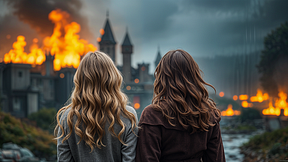
Cathyor did not fall in battle. It was murdered in its sleep.
The Aedonians found a way to sever the Sacred Bond—how, I do not know, the rumors are many. But when the connection between the women of Trefn Cyfiawnder and their Dryads was broken, everything that had made Cathyor untouchable disappeared in a single breath. Their magic failed, the women’s swords went dark, and their cloaks were nothing but cloth in the wind. And the army that had been waiting for exactly that moment came for them.
What followed was not a war. It was an annihilation. Brynn was burned, its people slaughtered in the streets. The king and queen were killed, and their infant son vanished, his fate unknown. Trefn Cyfiawnder, the order that had protected Cathyor since before most kingdoms existed, was scattered and nearly destroyed. Everything the Cathyoran had built across generations was torn apart in a matter of hours.
But you cannot erase a place by taking it off a map.
Walk those roads today—the old ones, cracking under moss—step into the deep woods where sacred oaks stand, and you will feel it. Innatraea has not forgotten. The forests are Cathyoran in a way no border can change. The stillness there is not emptiness, but patience.
Cathyor is not on the maps anymore, but it is in the ground, in the people, in the roots.
They are waiting, and they remember everything.
Hadau a Gwreiddiau
Seeds and Roots
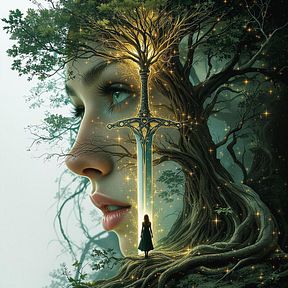
I have written of many kingdoms in these pages. Some are rich, or powerful, and others will outlast the mountains they were built upon. But I have never written of a kingdom that deserved to survive as Cathyor did, and I may never again.
The Cathyoran understood what most of Innatraea has forgotten—that power is empty if it does not serve love, and love is empty if you are not willing to die for it.
The women of Trefn Cyfiawnder understood this so deeply that they built an entire order around it. Every woman, man, and child of Cathyor knew it.
The Cathyoran have a battle pledge. I have heard it spoken by survivors in the deep woods, old women who remember Brynn, and young ones who never saw it but carry it in their blood. They speak it quietly now, but there is nothing quiet about what it means.
“Peidiwch byth ag ofni’r cwymp, oherwydd yfory, fel hadau ein hynafiaid, byddwn yn codi eto.”
Never fear the fall. For tomorrow, like the seeds of our ancestors, we will rise again.
The roots are deep, the seeds are planted, and Cathyor is not done.