The Island

I came to Sceotan by sea in early spring, on an Am’Ayim ship whose captain swore we’d make harbor before the birds did. We didn’t.
They caught us a day out from the island. I took them for the weather at first, a darkness low on the northern horizon, until it began to sing. Then they were over us, thousands upon thousands of sparrows, swifts, and birds I had no names for, so many that the sails fell into shadow and the crew stopped their work to watch. They poured south for hours. An old deckhand told me I’d come in time for Tzipcanu, and laughed when I asked what that was.
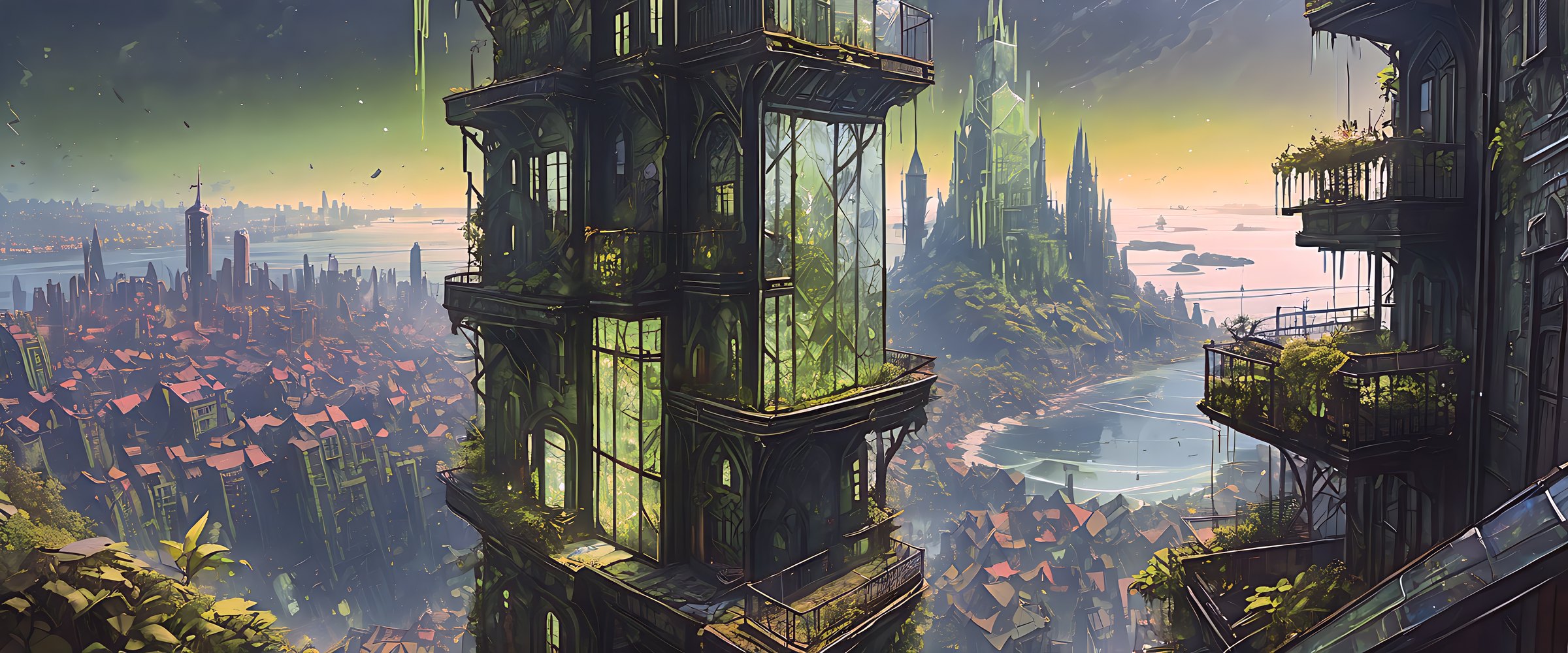
The tower was the first thing on Sceotan I saw. Sailors call it Djelem’den when they want to sound proper, but mostly just the Garden Tower, and once you’ve seen it you understand why. It rises from the water green, trees and flowering vines climbing dark stone until the top of it is lost in clouds. Lines of light run through that stone, faint in the daylight. I stood at the rail and stared until the captain told me to close my mouth before a bird flew into it.
I had come to see the Weavers. Every traveler does, the first time. The tower was there, and the robes, and later the rings. But when we tied up, the flocks were settling onto the roofs. People had set out seed and cut fruit on every windowsill, and children ran the streets in feathers and paint, shrieking at the birds and at each other. Paper birds hung from the stalls. Somewhere an old man was playing a song about fishermen coming home.
That night I slept at an inn by the water with the shutters open. In the morning there were sparrows on the sill, eating the seed I had left for them.

The Kingdom
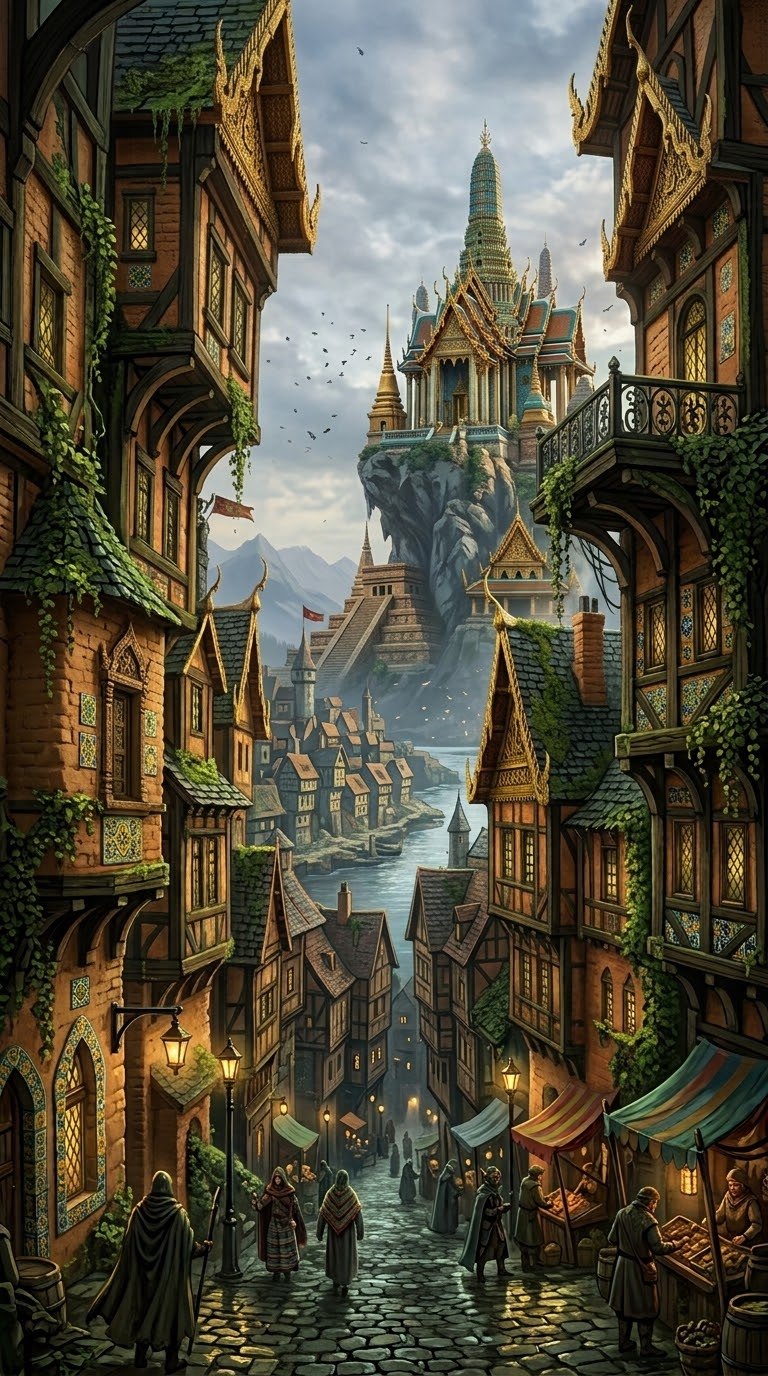
It took me days to learn how many places there are on Sceotan. The main island sits at the center with the tower at its heart, and from its shores bridges reach out over the water to smaller islands all around it. Some are barely large enough for a handful of houses, while others are crowded with whole neighborhoods. Sceotians don’t bother naming most of them. They’re simply Sceotan.
Water runs between everything, at every height. Canals cut through the main island and pass beneath bridges built on top of other bridges. Where one waterway meets another at a different level, boats wait in stone chambers while the water fills or drains around them, lifting them up or setting them down, and the lock-keepers shout at every captain who tries to hurry. Heavy chains cross the wider channels, raised and lowered to decide what passes. I spent an afternoon on one bridge watching a fishing boat, a spice barge, and a Guard cutter wait their turns in the same lock. Nobody’s turn came any faster.
Some of the outer islands belong to other peoples. They’re Sceotan all the same, but cross the right bridge and the language changes under your feet, the cooking smells change, and the little harbor below flies another kingdom’s colors. Traders and sailors from half of Innatraea keep homes and warehouses out there, and each quarter has its own quarrels, debts, and friends or enemies among the Weavers. I learned quickly not to ask who governs what. Everyone gave me a different answer.
Innatraea knows Sceotan as the home of the Weavers. Their tower stands over everything and their word carries into every court on Innatraea. But the captains who’ve sailed here longest will tell you, usually over a drink, that nothing moves on Sceotan without the Sceotians: their dockworkers, lock-keepers, shopkeepers, cooks, clerks, and fishermen. The Weavers know it too, though some of them forget.
The Sceotians themselves are loud, warm, and quick to laugh. They dress in undyed linen against the heat, and many tuck a bright feather behind one ear. Mornings smell of frangipani and frying oil. Workers buy chilatlukhu from street carts at dawn, crisp tortilla softened in red pepper sauce with crumbled cheese and cream, and I ate it every morning I was there. Papaya and banana trees grow on the rooftops among citrus and hibiscus, full of birds. Kahve comes in from Tursim, bitter and thick, and every inn on the island serves it in cups too small to finish a thought over.
Djelem’den
Pedestal of the World
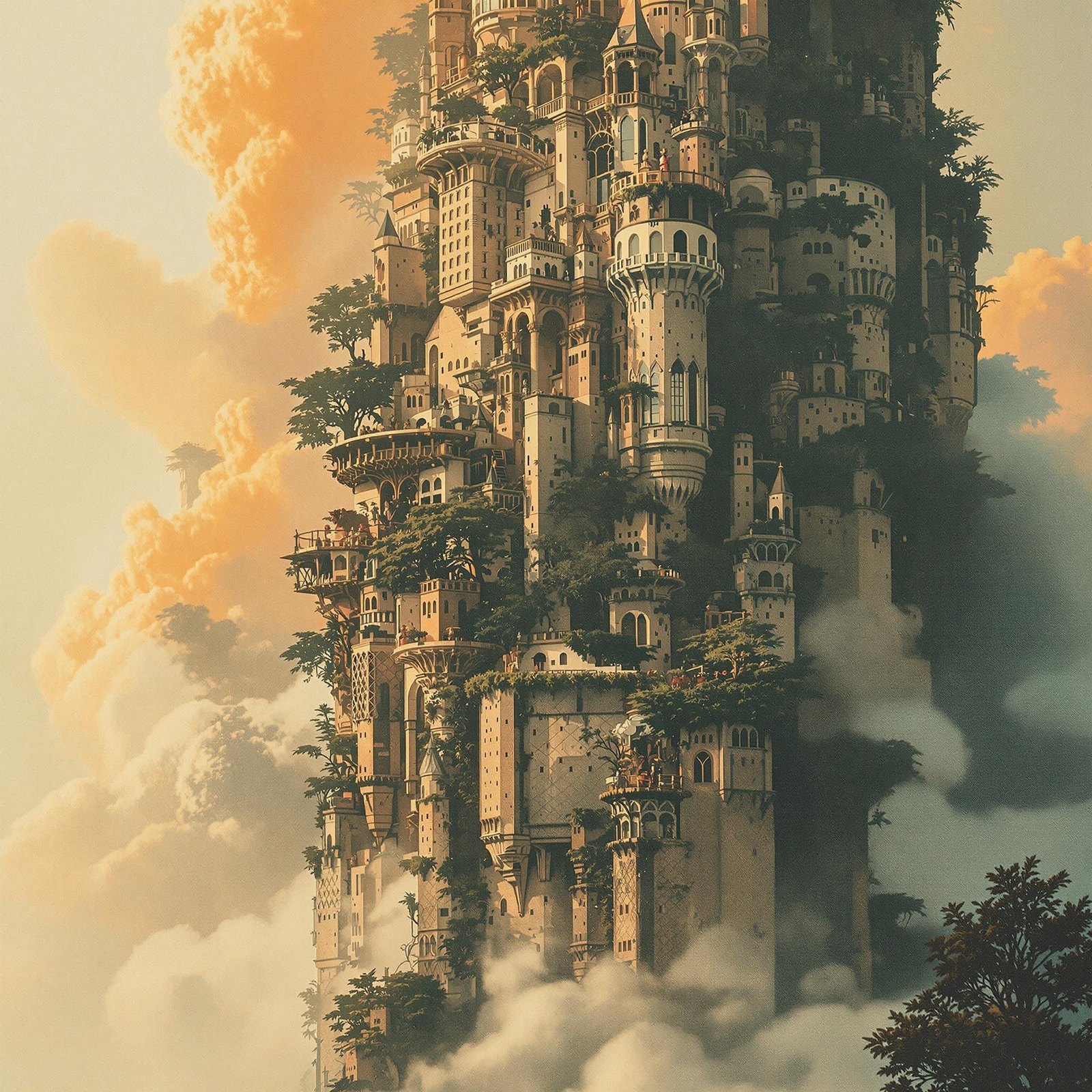
The great doors of Djelem’den stand open to anyone who wants to walk through them, and on my second morning there I did. Up close the tower is a kingdom standing on end. The central spire climbs until the clouds swallow it, and every face of it is balconies, walkways, and stairs twisting up and around, all of them planted with fruit trees on the lower terraces, flowering vines trailing from the higher ones, whole groves hanging in the air. That’s the green you see from far away. Closer in, you hear it too, birds and falling water and wind moving through leaves far overhead.
The stone is dark, nearly black, and there isn’t a seam in it anywhere. I ran my hand along the base of the wall for a long time looking for mortar or a mason’s mark and found neither. Veins of pale light run through it, brighter at dusk, and no one on Sceotan remembers the tower ever needing repair. It was ancient before anyone thought to write down its history. Every scholar I met inside had a different theory about who could have raised it, and not one of them sounded sure.
I was allowed as far as Kugwa mu Buzima, the Falls of Life. The name comes from another tongue, as so many names in Djelem’den do. There the water falls upward. It rises from wide pools in long, clear sheets and climbs out of sight into the tower, carrying fresh water to every floor above. I stood in the spray with a dozen other visitors, all of us soaked, none of us willing to leave.
A Wall rings the central tower, though wall is a small word for it. It holds hundreds of rooms stacked around forested gardens, fountains, and parks, with the Goddess Grove somewhere in all that green, and it joins four lesser towers at the compass points. To the north stands the Bastion, where the Goddess Bound train behind a Warding no one passes without the right talisman. I never got past its gate. To the south rises K’jadbashima, the House of Sacred Knowledge, and I spent more hours in its open library than I’d like to admit. The Cancellaria di Scrutati in the east keeps the Weavers’ accounts and records reaching back millennia, and sounds like it, all scratching quills and murmuring clerks. The western tower, Migdal’kes, is a labyrinth of gardens, temples, and forest, and it deserves its own telling.
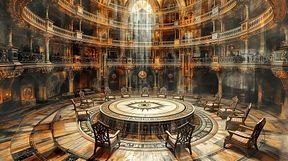
Somewhere near the top of the central tower, above the clouds on some days, is the Great Loom, where the Greater Consensus sits. I never saw it. I know it only as most of Innatraea does, from people who’ve stood on its balconies. It’s a round chamber like a cathedral, with great stained-glass windows telling the Weavers’ history, and chairs around a plain table of moangi wood, each chair made to its owner’s design. The floor is Sophenen marble, carved with the name of every Weaver who ever held one of those seats. Observation balconies ring the whole chamber, with no stairs down to the floor. The Goddess Bound guard its doors and never step inside.
Weaving

The first Weave I ever saw up close was a small one. An old Sister sat reading on the steps of K’jadbashima as the evening came on, and when the light grew too dim she lifted two fingers and a pale gold ball of light appeared in the air beside her page, no larger than an apple. She never looked up from her book.
Weaving is a gift few are born with, and it turns up anywhere, in a fisherman’s daughter or a lord’s son, among every people on Innatraea. Those who have it see threads the rest of us can’t, threads of power running through everything Innatraea is made of. They can take hold of those threads and move them by will. Water, wind, fire, and rock are the four the Weavers know. They’ll tell you there were once more.
Every Weaver I asked explained it differently, but three words came up again and again: will, knowledge, and imagination. A Weaver has to understand what they’re shaping, see the pattern before it exists, and hold it there by strength of will. A glow orb takes almost nothing. Steam, ice, or lightning, where threads are woven together, take more. Raising a wall of stone or lifting a man into the air takes a great deal, and the greatest workings can break the one who attempts them.
Weavers argue endlessly about perception. Seeing the threads is what makes a Weaver, and many of them believe that how a Weaver understands what they see matters as much as the seeing itself. A hopeful Weaver and a frightened one look at the same thread and make different Weaves of it. Some go further, and say the threads are never quite settled until someone looks at them, so that to witness a thing clearly already begins shaping it. I heard that argued in libraries and in taverns, by Weavers and by people who’d never seen a thread in their lives.
The cost is real. I watched a Weaver finish a long working with blood running from her nose, waving away anyone who tried to help, and those who push further than that pay in ways that don’t heal. A Weaver can mend another’s wound but can’t close their own. Elements stay what they are however they’re woven together. A Weave built on a pattern half understood can turn back on its maker, and older Weavers speak of such mistakes the way sailors speak of friends lost at sea.
The first thing every initiate learns is the glow orb, light bent into a sphere and set floating wherever it’s wanted. Glow orbs come in every size, shape, and color, and move at their maker’s whim. Sister Chiyo Hasegawa, a Weaver of Shinodan descent who lived long ago, wrote a whole book on bending light, and a well-thumbed copy sits in K’jadbashima’s open library. I read it twice and understood perhaps a fifth of it.
Choni
The Circle
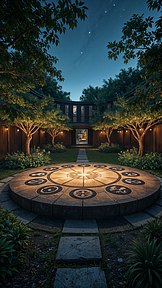
The Choni lies in the main courtyard of Djelem’den, a great ring of stone set flush into the grass, and most days people walk right across it, children chasing each other, initiates running to their next class, and clerks cutting through toward the Cancellaria. It took me a while to notice it at all, and longer to see that its stone matches nothing else on Sceotan. Rock Weaves slide off it. Nobody knows what it’s made of, or who laid it there.
Runes cover it, in a script unknown even to the oldest Weaver. The inner ring holds eight symbols. The Weavers know four of them: water, wind, fire, and rock. Between each pair sits another, and those four are the lost ones, the elements Weavers say once existed and have long since forgotten how to touch. Beyond them an outer ring runs thick with more symbols, and not one of those has ever been read.
The Circle answers Weaving. When an element is woven within it, that element’s symbol lights, and this is how an initiate becomes a Weaver. At the Encesa, an initiate stands inside the Circle and Weaves. They must light at least one of the inner symbols to prove they understand the threads and truly hold an element. Most can light one by the time they’re allowed to perform the Encesa. Only one Weaver in living memory has lit two, and people across Sceotan still talk about that day.
When more than one symbol burns at once, the Weavers say the Circle resonates in a way none of them can explain. What would happen if all eight lit is anyone’s guess, and I heard plenty of guesses. Some believe the Weavers in ancient times were able to light more. Others say there are circles like this one in the lands of the Sacred Folk, among the Shedon, carved with the same unreadable runes.
One evening I stood at the edge of the Circle while the light went. It stayed dark. A little girl hopped across it from symbol to symbol on one foot, counting under her breath, and when she reached the unknown ones she skipped them.
Weavers’ Rings
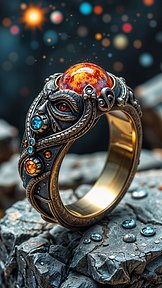
Every Weaver I met wore a ring, and I caught myself watching hands the way most travelers watch faces in a new city. No two rings are alike. Most are shaped like knots, of metals and gems I couldn’t name, and all of them hold a faint glow of their own.
A ring is how the rest of Innatraea knows a Weaver. Anyone can sew the Great Eye and Loom onto a robe. Only full Weavers wear rings, and how the rings are made or given is known only to the Weavers themselves. Each ring is said to carry the personality, power, and beliefs of its bearer. Some Innatraeans claim a ring shows the true intentions of the Weaver who wears it, or their soul.
A ring answers only to its bearer. No one else can wear it unless it’s freely given, not even another Weaver. The stories agree that a stolen ring won’t slide onto a thief’s finger, can’t be melted down or have its gems pried loose, and can’t be altered in any way. A Weaver always knows where their ring is. Nearly every tavern on Sceotan has a story about someone who tried to steal one, and they always end badly for the thief.
Rarely, when a Weaver retires, a Legacy takes their ring and becomes an initiate. This is almost always a child or student they’ve chosen as heir to everything they built as a Weaver. No one outside the order understands how, though most assume some bond runs between Weaver and Legacy, because of how the ring fits its new bearer and slowly reshapes itself to them. Praeus, whose writings on power and logic Innatraeans have quoted for centuries, called this the attunement, and believed it quickens when the old bearer dies.
Even an unshared ring changes. People who’ve seen the same old Weaver years apart swear their ring was different, a gem deeper in color or a knot turned a new way, though no one knows whether the Weaver changed it or the ring simply changed with them. There’s a whole school of scholars devoted to Weavers’ Rings, called Tekhsorla, “Magic Soul,” and many of them will tell you the rings are alive. I laughed when I first heard that. I don’t anymore.
The Order
The Weavers call one another Sister and Brother, and they behave like a family bound by power and law: ancient, sprawling, drawn from every kingdom on Innatraea, and forever quarreling. There are a few hundred full Weavers, give or take, and some have lived for many centuries. The oldest, people say, have seen more than two thousand years.
Initiates are called by their family name. Until they’ve passed the Encesa they can’t leave Sceotan, study from dawn until they drop, and must obey any full Weaver who gives them a command. An initiate can appeal to the Priestess of Initiates when a command is unjust, but everyone on Sceotan knows the price of an appeal judged unwarranted. Once an initiate lights a symbol in the Choni, they become a full Weaver, earn their ring, and may go wherever they please, with a living stipend from the order if they have no wealth of their own.
The Greater Consensus governs them all, a circle of thirteen full Weavers who decide every matter of law, coin, and policy by majority. Once they reach consensus, those who lost the vote are expected to stand behind it in public. A member leaves their seat only by death, resignation, or conviction of true impropriety, and rarely are all thirteen known at once. All other full Weavers on Sceotan form the Lesser Consensus, and when a meeting is opened they watch from the balconies of the Great Loom. When Closed Consensus is called, no one watches at all.
The Weavers are the wealthiest power on Innatraea. Their infused gems have hung at noble throats for generations, and though the Consensus holds to neutrality in the affairs of kingdoms, every king and queen courts them anyway.
Notable Weavers

Sister Aranya “Mother” Jimaiyo is one of the three oldest Weavers living. She’s Sceotian-born, tiny and silver-haired, and has turned down every office the Weavers have offered her, keeping instead a home full of orphans and old folk with nowhere else to go. I saw her at Tzipcanu, stopping for every beggar on the parade route and holding each of them before she pressed coins into their hands. Sceotians, who simply call her Mother, will tell you, smiling, about the tax she once refused with a single word, and the days all of Sceotan stood still until the Greater Consensus took it back.
Sister Srishti Thavarajah is another of the three oldest. She comes from Amng’khor, is a master of Yuj, the Amng’khoran art of movement, combat, and meditation, and is counted among the greatest philosophers Sceotan has known. Her daughter Rukmini once wrote that Srishti used to ask her, as a child, whether a tree falling where no one could hear it made any sound.
Sister Rukmini Thavarajah spends her time bringing joy into Djelem’den. She teaches, runs a theater company for Weavers and initiates, and is a grand master of Yuj in her own right. Where most Weavers wear one ring, she wears five, one for each element of Yuj, chained to a bracelet. She carries ink and parchment everywhere, and has been seen screaming alone in empty rooms, talking to animals, and staring at a tree as if waiting for it to answer. Some Weavers laugh her off, yet scholars across Innatraea study her writings. I saw her once, dancing alone in the surf at night. A fisherman mending nets nearby told me she does it so the moons can see her.
Sister Taia Mirzoyan is a Sophenen on the Greater Consensus, and anyone who deals with the Weavers on matters of trade or treaty learns her name quickly. She’s known as a master of logistics and politics, said to know where every ship, coin, and vote is headed before it gets there. At Tzipcanu I noticed her on an inn balcony above the parade, a cup of kahve in hand, watching the crowd below.
Sister Evelyn Atwood, Aedonian-born, sits on the Greater Consensus and serves as Priestess of Initiates, with authority over every part of an initiate’s life. Initiates quote her teachings to one another, and the one I heard most often was that how an initiate perceives and understands knowledge shapes the Weaver they become.
Brother Eyran of the Zimsway Rinowhn sits on the Greater Consensus and serves as Lore Keeper of K’jadbashima. His tribe follows a peaceful faith called the Way, holds memory sacred, and farms haze flower better than anyone. Every archive, restored manuscript, and tome in the largest library on Innatraea answers to him.
I heard Crilla Sharone’s name in more corners of Innatraea than any other Weaver’s. A Sophenen and a legend, she sat for a long time on the Greater Consensus, and her influence reached into courts and cities far from Sceotan. Then, over a disagreement concerning the initiates, she resigned her seat and left Sceotan, something no Weaver of her standing had done before. Sceotians still argue about whether she was right.
The Goddess Bound
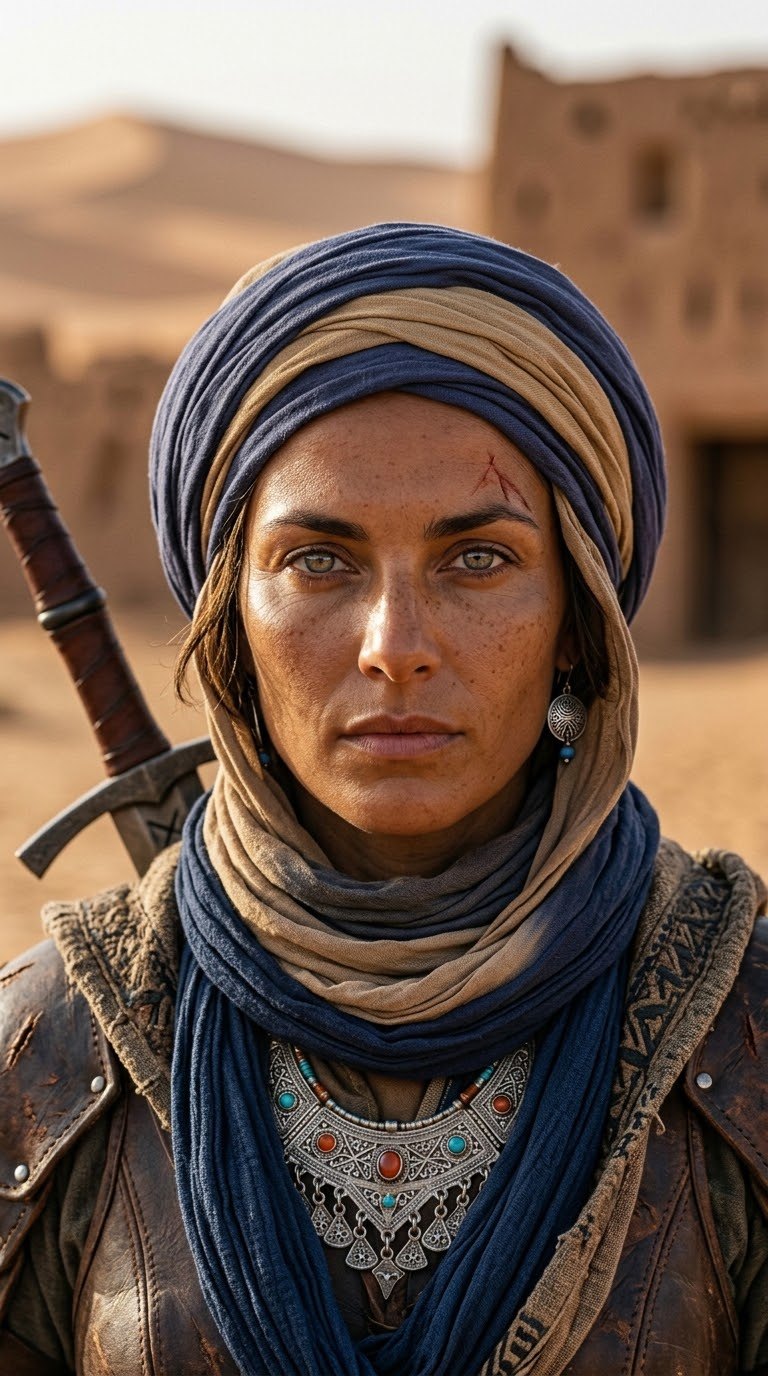
The first Goddess Bound I noticed was walking beside Mother Jimaiyo at Tzipcanu, a woman with a sword at her hip, throwing handfuls of candy to the children. A Sceotian next to me said she’d been one of Mother Jimaiyo’s orphans more than a century ago, and was bound now to another Weaver entirely. She looked barely thirty.
The Goddess Bound are the Weavers’ own warriors, each bound to a single Weaver as their guard. The Bond is made by a sacred Weave that only full Weavers know, a working of all four elements that wraps the warrior’s very being and ties it to their Weaver for life. It gives them centuries of life, greater strength, speed, and endurance, and wounds that close faster than they should. A Goddess Bound can feel where their Weaver is, near or far, and some say that when close, they can feel what their Weaver feels.
The Bond has its price. It carries a strong and lasting pull to obey, and the Bound give a great deal of themselves to their Weaver. They come to it out of love, duty, or ambition. Some cross Innatraea seeking the honor, some are chosen, and some were a Weaver’s childhood companions, bound young. Binding anyone against their will is the gravest wrong a Weaver can commit, and Weaver law forbids it. There are rumors it happens anyway.
A Bond answers to one Weaver alone, and a Goddess Bound owes obedience to no other, though respect is given to all. Some Weavers bind several, though rarely more than three or four, since each Bond is a great responsibility. Men and women serve alike, and a few Goddess Bound are bound to no Weaver at all, serving the order as a whole. They train in the Bastion under the most seasoned of their own, blending fighting styles from across Innatraea.
Sceotan keeps its own soldiers as well. The Sceotian Guard is raised mostly from native Islanders, along with those who cross the sea looking for honest soldiering, men and women together. It’s the Guard who walk the bridges and keep the harbors and locks. They train beside the Goddess Bound, share the island’s defense with them, and carry arms worked by Weavers, with arrows that glow before they fly and knights’ swords that return to the hand. Coin and craft pass back and forth between Guard and Weavers constantly. I saw a Guard knight toss his sword off a bridge into a canal and hold out his hand, and it rose out of the water into his grip, dripping, while the children on the bridge shrieked for him to do it again.
The Sacred
Migdal’kes, the Tower of Ceremony, is built to be wandered. Passages open onto gardens, which give way to forest, whose paths lead to temples, and stone walkways wind through all of it, marked at every turning by glow orbs so no one stays lost for long. Almost every ceremony the Weavers hold happens somewhere within it, along with their festivals, galas, and gatherings of faith. It’s the place on Sceotan the Weavers love most, and within an hour I understood why.
Nearly every faith on Innatraea has a place there. I passed shrines I recognized and many I didn’t, altars to deities I’d never heard named, and a small dim room where an old man knelt alone, praying in a language I couldn’t place. Nobody asked me what I believed. Pilgrims, Weavers, and gardeners walked the same paths, and the gardens around them feed Djelem’den fruit and greens in every season.
Four Great Trees stand in Migdal’kes, their canopies touching the clouds, their trunks broad enough to hold a castle, and each is home to a Dryad. Among them are Ashima, whom the Sceotians call the Lady of Destiny, and Oshun, whom I saw once from a long way off, standing among the roots of her tree and looking out over the forest as if she could see all of it.
Wild animals live throughout Migdal’kes, deer on the forest paths and birds in every branch, and some of the Sacred Folk make their homes there too. Wardens see that none of them come to harm.
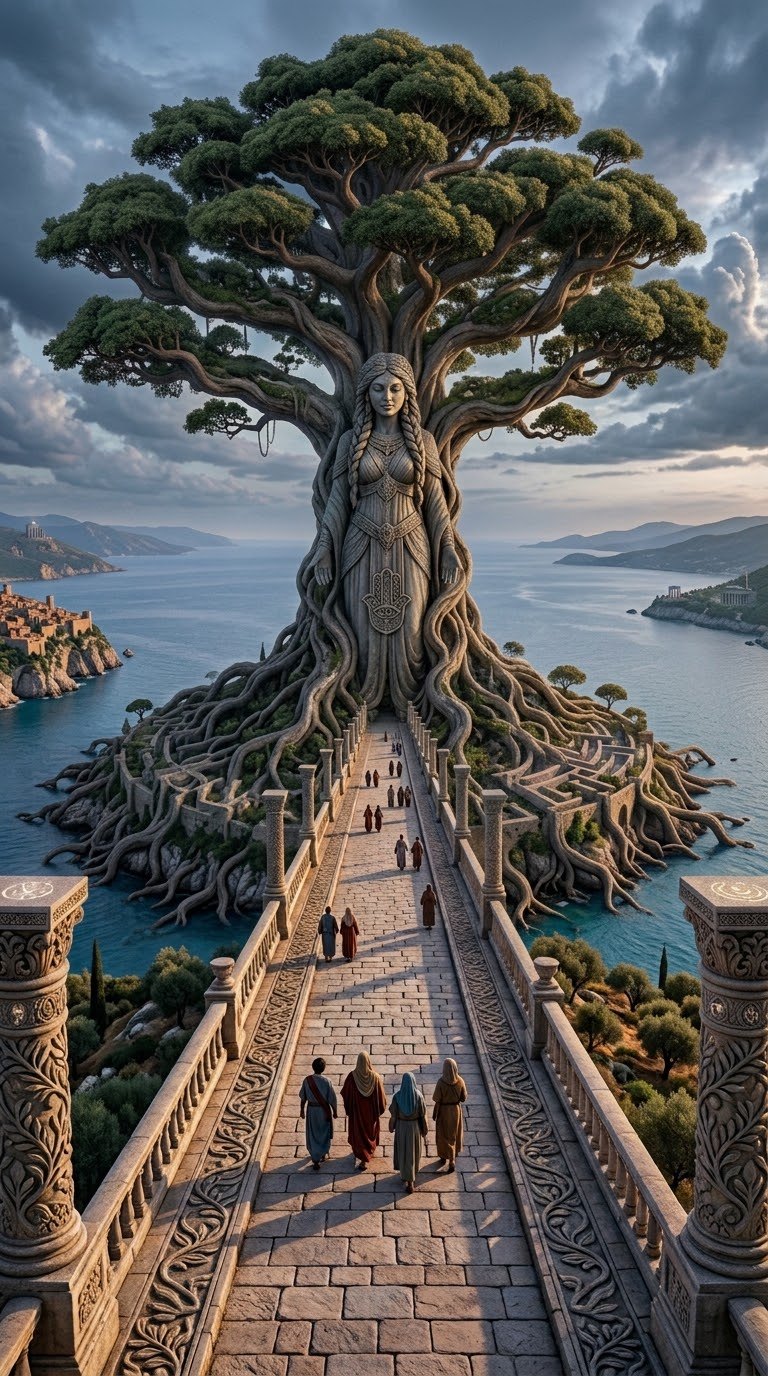
Out on one of the smaller islands stands the Visage of Asherah, a Great Tree and a monument to Innatraea’s mother goddess, together. It’s quiet there. People come alone or in twos, sit beneath the branches looking at Asherah’s ancient stone face, and say nothing for hours. One morning I went and sat with them, and when I finally stood to leave, the sun had moved a long way across the water.
Whispers
Sceotan runs on rumors. Stay long enough and you’ll hear of tunnels beneath the whole island, and of a Vault under K’jadbashima that only full Weavers may enter, holding thousands of years of secret histories and treasures. The Weavers neither confirm nor deny any of it, politely.
There are artifacts, people say, stranger than any ring, kept in rooms no visitor will ever see. One of them, the Ijisho Ryimana, the Goddess’ Eye, is said to let the Weavers look out through the Bastion’s stained glass onto any corner of Sceotan. Forbidden arts lie buried deep in Djelem’den, Arcanographing among them, whose names alone make an old Weaver change the subject, along with ideas, some say, that the Weavers decided Innatraea was better off without.
The rumor sailors lower their voices for is Dust. Weavers have infused gems since the beginning, or long enough that no one remembers when it started, and those glowing stones fill the jewel boxes of the wealthy across Innatraea. Ground into powder with Weaving, the story goes, those same gems become a dust that lets an ordinary Innatraean see the threads and move them for a little while, in a rapture beyond anything else. It’s said to be addictive past all bearing.
Where Dust came from depends on who’s telling it. Some say the Weavers made it themselves, to control those who take it. Others tell of a Weaver whose name no one knows, who perfected it long ago on Sceotan and then vanished into the wider world, spending the centuries since gathering ordinary Innatraeans devoted to her. They call themselves the Prism, and they amass wealth and power, seeking the truth behind whatever divides Weavers from everyone else.
Many Weavers dismiss the Prism as a tale. A few are said to be hunting it. I noticed that the ones who laughed at the rumor laughed a little too quickly, and that nobody ever said the name loudly.
The Last Lock
I left Sceotan at the end of summer, on a Tursi ship with infused gems in its hold, bound for other people’s jewel boxes. It was raining, and Djelem’den rose over the rooftops soft and green, its top hidden in cloud, the lines in its stone just visible through the grey.
The Weavers I met there had come from all over Innatraea, and each of them had been a child once, somewhere, seeing threads no one around them could.
At the harbor mouth we waited our turn like everyone else. A Weaver’s cutter slid in behind us, a Sister standing impatiently at the rail. The lock-keeper looked at her, then us, and lowered the chain for our ship first.