
The Ara’Ayim Isles
Isles of Sea Mist
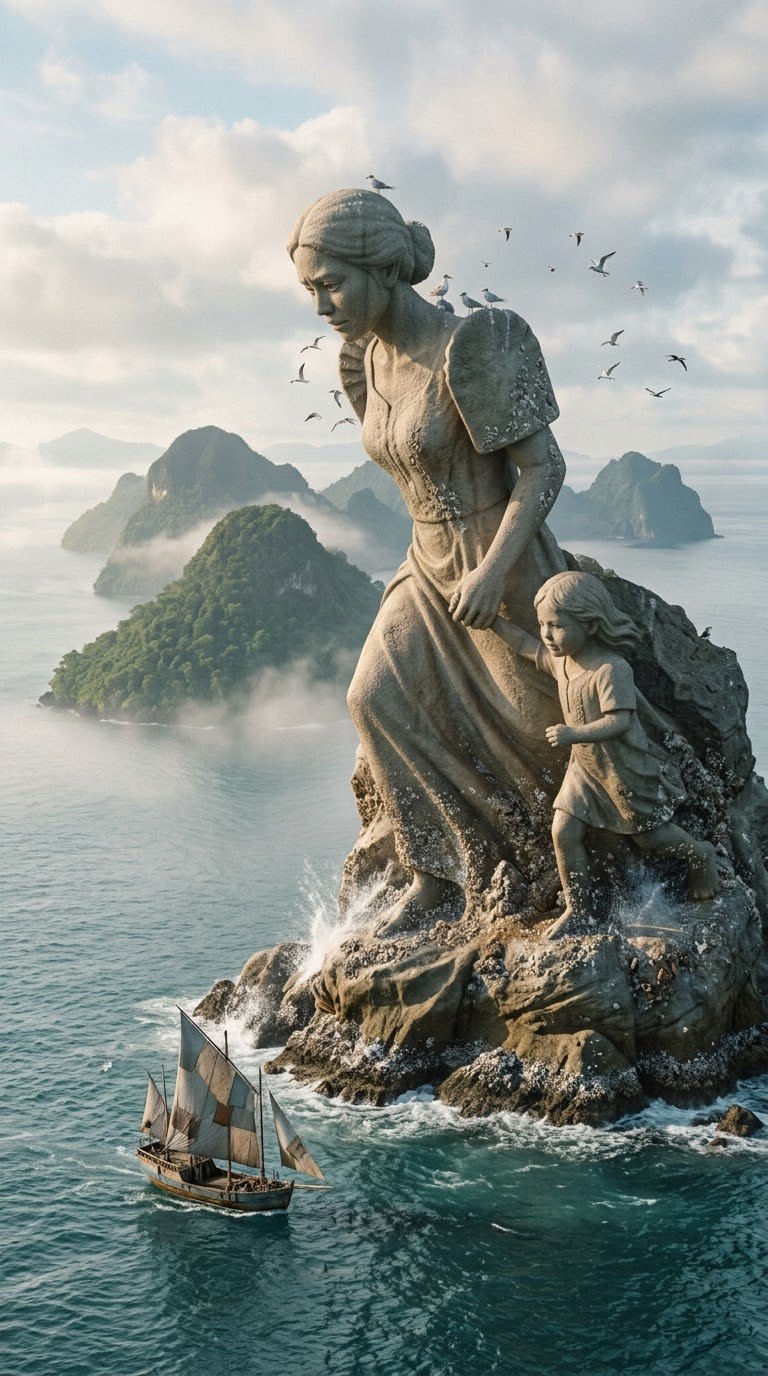
You smell the Isles before you see them. Salt, and beneath it a wet, heavy floral sweetness you can’t name, carried on mist that rolls off the water, clinging until sea winds carry it away. The Am’Ayim call their home the Ara’Ayim Isles, the Islands of Sea Mist, and when I sailed toward them for the first time I felt the name more than I understood it.
The isles are far off Innatraea’s western coast, where land disappears and Di Saalt takes over. Many of the islands are so close together that from a distance they look like one place. Up close there are dozens. Some rise into green mountains wrapped in clouds, while others are little more than a crescent of white sand and a stand of wind-bent trees. Between them run channels so clear you can count the stones in their depths, crowded with fishing skiffs and trading boats until the water itself seems to breathe.
Then the mist parts, and you see her.
Babae ng Asin, the Woman of Salt, rises out of the ocean like a sentinel carved from stone, watching over her homeland. She is an Am’Ayim mother with her daughter running at her side, so large that ships pass beneath her like gulls. The sea has worked at her longer than anyone remembers. Barnacles crust her feet even though she still appears to be fleeing toward the isles, salt spray has worn her face soft, and her eyes are lowered to the girl beside her, seemingly indifferent to the dozens of ships sailing past her watch every day. The Am’Ayim say she remembers the day their people first came home to these islands, seeking refuge from a great turmoil. The rest of that story they keep among themselves, and in all my travels I’ve only ever caught pieces of it.
Every Am’Ayim who sails by her is meant to stop and think about their life—most of all, about how they’ve treated others. I’ve watched hardened sailors go quiet as she slides past, touch two fingers to their lips, and keep their eyes closed until her shadow has left the deck. I’ve seen a few of them weep.
She is also a boundary. Past her lies the central waterway and their inner isles, water that belongs to the Am’Ayim alone. Strangers are welcome on the few larger islands outside it, where the harbors are loud and a trader can buy anything from gems to rope to shells bright enough to hurt your eyes. Beyond the statue, foreigners do not go.
Ni’Moku lies just inside her gaze. The Isle of Birds is large and the seat of House Masudo power—western coasts and eastern bays, southern reefs and northern mountains, its great harbor called Kokoru Ista, the Bay of Fish. Great Herons are said to have once nested on its high cliffs in such numbers that the islanders still name places for them. Others whisper darker stories, saying that there are no birds on Ni’Moku. That the women of House Masudo are like the Great Herons, predators who smash the bones of their enemies beneath them.
Its neighbor Ni’Mautuba, the Isle of Fruits, sits so close that ships bound for Ni’Moku round its cape and find themselves in the bay almost before they know it.
Word moves fast among the isles. Stone signal towers stand above every harbor, cove, and hill, their signals flying over the salt like rays of light sent by Lux, their goddess of the sky.
Ask any Am’Ayim what their people are like, and they’ll tell you every island has its own answer. South Islanders are loud and quick to laugh, rough-tongued in a rolling drawl the other islands love to tease, and fiercely proud of their freedom to sail where they please; their festivals shake the ground. East Islanders talk trade faster than a Tursi money-changer counts coin, so thick with harbor slang that even other Am’Ayim ask them to slow down. The West Islands keep the oldest songs and the deepest rites to Caim, and when their storytellers speak, the hair rises on your arms. Of the North and Central isles I know less, and I’ll leave their stories to those who know them better. Every island keeps its own customs and way of life, down to how its people marry.
Past the isles lies Kaharian ng Caim, the Realm of Caim, a rift in the sea so vast that the Am’Ayim say it runs down into the depths of Innatraea herself. Far below its surface, past the reach of any light, Caim keeps his realm and watches over the dead. The rift circles the main approach to Maunga Tapu, the Sacred Mountain, a peak so immense that the green isles around it look like foothills, its summit lost in smoke and cloud. The Am’Ayim say Sacred Folk make their home there, and any ship bound for its shores must first cross Caim’s own water.
Sailors give the rift a wide berth and lower their voices when they speak of it, and every Am’Ayim child learns early that an intruder in that place forfeits their soul. Yet the same stories that warn you away speak of wealth waiting in the dark, gems and veins of metal beyond counting, lying where only the drowned can reach them. I’ve heard sailors argue half a night over whether that’s a promise or a trap. None of them offered to go and find out.
And everywhere, the waling-waling. These were the flowers I smelled on the mist, delicate blossoms that grow in dozens of varieties, each color carrying its own meaning. The Am’Ayim weave them into lei for weddings, scatter them on the docks when a beloved ship comes home, and throw them into the wind when an heiress is named. I once stood on a dock as the air filled with petals of every color, and the whole harbor fell silent as I closed my eyes and breathed in the sweet aroma.

Tala ng Asin
Tongue of Salt
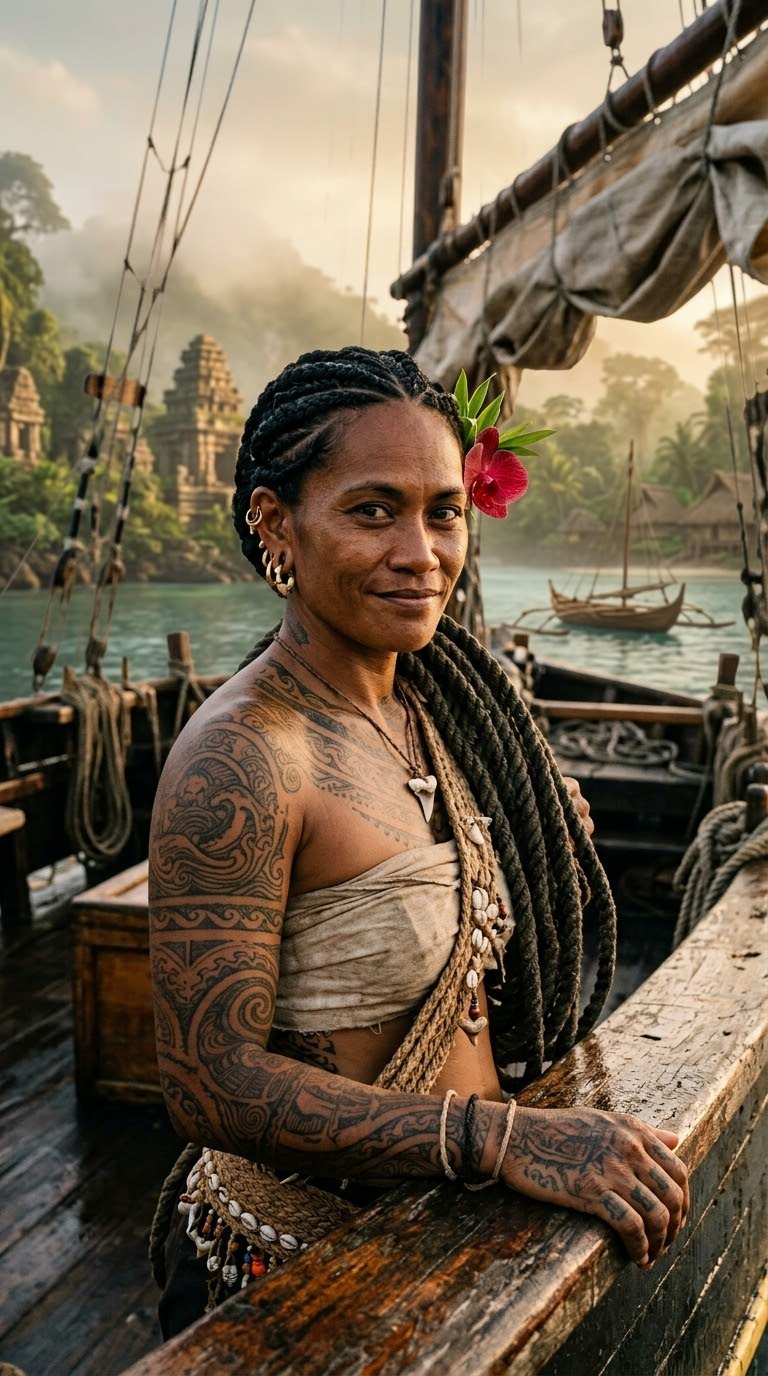
Stand in any Am’Ayim harbor long enough and you’ll hear two completely different languages, sometimes in a single breath, and neither of them is Common.
Salty Talk is the tongue of decks and docks, used in every trade worth making. It’s the Am’Ayim version of Innatraea’s common speech, rolled and stretched until it moves like water along a hull. Letters fall away as it goes—a heart becomes a haat, the sea becomes Di Saalt—and the rhythm pulls you along whether you follow the words or not. “Weh mi can help yuh wid?” is how a captain greets a stranger at the gangplank. “A wi way,” it’s our way, is what any Am’Ayim will tell you when asked why they do anything, said with a shrug, as if the answer were obvious.
Tala ng Asin, the Tongue of Salt, is their native speech, the old language of their isles, and Am’Ayim keep it for what matters most. Prayers to Lux and Caim, blessings spoken over a marriage, rites for the dead, the lore elders pass down to the young. It’s melodic and soft, full of rolled sounds and gentle consonants, with a catch in the throat when a word needs weight. I’ve heard it spoken over a wedding and over a body given back to the sea, and both times the sailors around me stopped what they were doing and bowed their heads. Each island shades it a little differently. The West Islanders keep words for Caim’s rites that others rarely use, and the East Islanders have bent it to their trading. And South Islanders have turned it into a dancing, musical rhythm all their own.
Am’Ayim take words seriously, and none more than names. Every name is chosen for meaning, and a child grows up expected to earn it. A girl named for kindness is expected to have a gentle heart, and a boy named for courage had better not flinch in the training ring. I once asked an old sailor what his name meant. He laughed and said he’d tell me when he finally lives up to it.
Asin, Di Saalt (The Salt)
To Am’Ayim, Innatraea’s seas, or Di Saalt, represent both life and death. This struggle is the heart of their people.
Their seas are sacred, the place where they are born, live, and die. In Tala ng Asin they call it Asin, and that one name holds all three meanings; you can hear it in everything they do. On deck it becomes Di Saalt, and sailors speak of her as they would an old captain, with respect and fear. “Di Saalt nuh kier,” they’ll tell you. The Salt doesn’t care. She drowns the good and the wicked alike, and feeds them both while they live.
Am’Ayim life begins in the surf. Most mothers wade out into the waves to give birth, and a child’s first breath comes with salt on its lips. They say a child too weak for that first meeting doesn’t survive it. Those born on land are called pikni ng baybayin, shore children, and the name isn’t kind. I’ve known good sailors who spent years proving they belonged on a deck, all because of where their mothers lay when they came into the world.
Two gods watch over the Salt, a sister and brother. Caim, He who drowns the weak, rules the realm beneath—the depths, the dead, and strength itself. He takes those who are weak in body, mind, or soul, and he demands blood as the price of safe passage and return home. His sister Lux, She who lights the way, rules the sky above. She is light and hope, the stars a sailor steers by on a black night. The Am’Ayim honor them both, and I’ve never heard one call Caim evil. He tests them; Lux guides them home. Am’Ayim life is spent between the two.
Salt guards them in nearly every ceremony. Before a bad storm, I watched a ship’s priest walk the length of her deck, casting handfuls of white salt into the water and murmuring in Tala ng Asin every few paces, until the whole ship had been blessed.
These priests are called Pirihi, and they are neither man nor woman. They give up that distinction when they take their vows, becoming a bridge between the living and Caim’s realm. You’ll know one by the necklaces of small bones at their throat and the wisdom in their all-seeing eyes. A Pirihi knows the tides and the signs within them, blesses the dead before the sea takes them back, and on long nights keeps the crew’s stories alive, because Am’Ayim believe a story that stops being told is lost to Caim forever.
Am’Ayim call whales tohora, their Ocean Brothers, and no Am’Ayim ship will ever hunt one. When a pod rises near a hull, sailors leave their work to stand at the rail, and I’ve watched a whole crew touch two fingers to their lips as a great gray back rolled past close enough to wet the deck. They say that when a tohora dies, its spirit leaves the water behind and rises into the sky, where it becomes one of the Sacred Folk in Lux’s realm. On clear nights at sea, sailors will point to a drift of stars and tell you which of their brothers swims there now.
Every tide, they believe, leads at last to Tubig ng Tadhana, the Tides of Doom, the end of all things, when Caim swallows the Salt itself. Until then they sail Dagat ng Panahon, the Sea of Time, where fate runs in currents like any other water. No one can fight those currents. A good sailor reads them, chooses a course, and trusts Di Saalt. When Am’Ayim say the Sea of Time has them, they mean the matter is out of their hands, and then they go back to hauling rope.
Asin, Di Saalt
The Salt

To Am’Ayim, Innatraea’s seas, or Di Saalt, represent both life and death. This struggle is the heart of their people.
Their seas are sacred, the place where they are born, live, and die. In Tala ng Asin they call it Asin, and that one name holds all three meanings; you can hear it in everything they do. On deck it becomes Di Saalt, and sailors speak of her as they would an old captain, with respect and fear. “Di Saalt nuh kier,” they’ll tell you. The Salt doesn’t care. She drowns the good and the wicked alike, and feeds them both while they live.
Am’Ayim life begins in the surf. Most mothers wade out into the waves to give birth, and a child’s first breath comes with salt on its lips. They say a child too weak for that first meeting doesn’t survive it. Those born on land are called pikni ng baybayin, shore children, and the name isn’t kind. I’ve known good sailors who spent years proving they belonged on a deck, all because of where their mothers lay when they came into the world.
Two gods watch over the Salt, a sister and brother. Caim, He who drowns the weak, rules the realm beneath—the depths, the dead, and strength itself. He takes those who are weak in body, mind, or soul, and he demands blood as the price of safe passage and return home. His sister Lux, She who lights the way, rules the sky above. She is light and hope, the stars a sailor steers by on a black night. The Am’Ayim honor them both, and I’ve never heard one call Caim evil. He tests them; Lux guides them home. Am’Ayim life is spent between the two.
Salt guards them in nearly every ceremony. Before a bad storm, I watched a ship’s priest walk the length of her deck, casting handfuls of white salt into the water and murmuring in Tala ng Asin every few paces, until the whole ship had been blessed.
These priests are called Pirihi, and they are neither man nor woman. They give up that distinction when they take their vows, becoming a bridge between the living and Caim’s realm. You’ll know one by the necklaces of small bones at their throat and the wisdom in their all-seeing eyes. A Pirihi knows the tides and the signs within them, blesses the dead before the sea takes them back, and on long nights keeps the crew’s stories alive, because Am’Ayim believe a story that stops being told is lost to Caim forever.
Am’Ayim call whales tohora, their Ocean Brothers, and no Am’Ayim ship will ever hunt one. When a pod rises near a hull, sailors leave their work to stand at the rail, and I’ve watched a whole crew touch two fingers to their lips as a great gray back rolled past close enough to wet the deck. They say that when a tohora dies, its spirit leaves the water behind and rises into the sky, where it becomes one of the Sacred Folk in Lux’s realm. On clear nights at sea, sailors will point to a drift of stars and tell you which of their brothers swims there now.
Every tide, they believe, leads at last to Tubig ng Tadhana, the Tides of Doom, the end of all things, when Caim swallows the Salt itself. Until then they sail Dagat ng Panahon, the Sea of Time, where fate runs in currents like any other water. No one can fight those currents. A good sailor reads them, chooses a course, and trusts Di Saalt. When Am’Ayim say the Sea of Time has them, they mean the matter is out of their hands, and then they go back to hauling rope.
Buhay ng Barko
A Ship’s LIfe
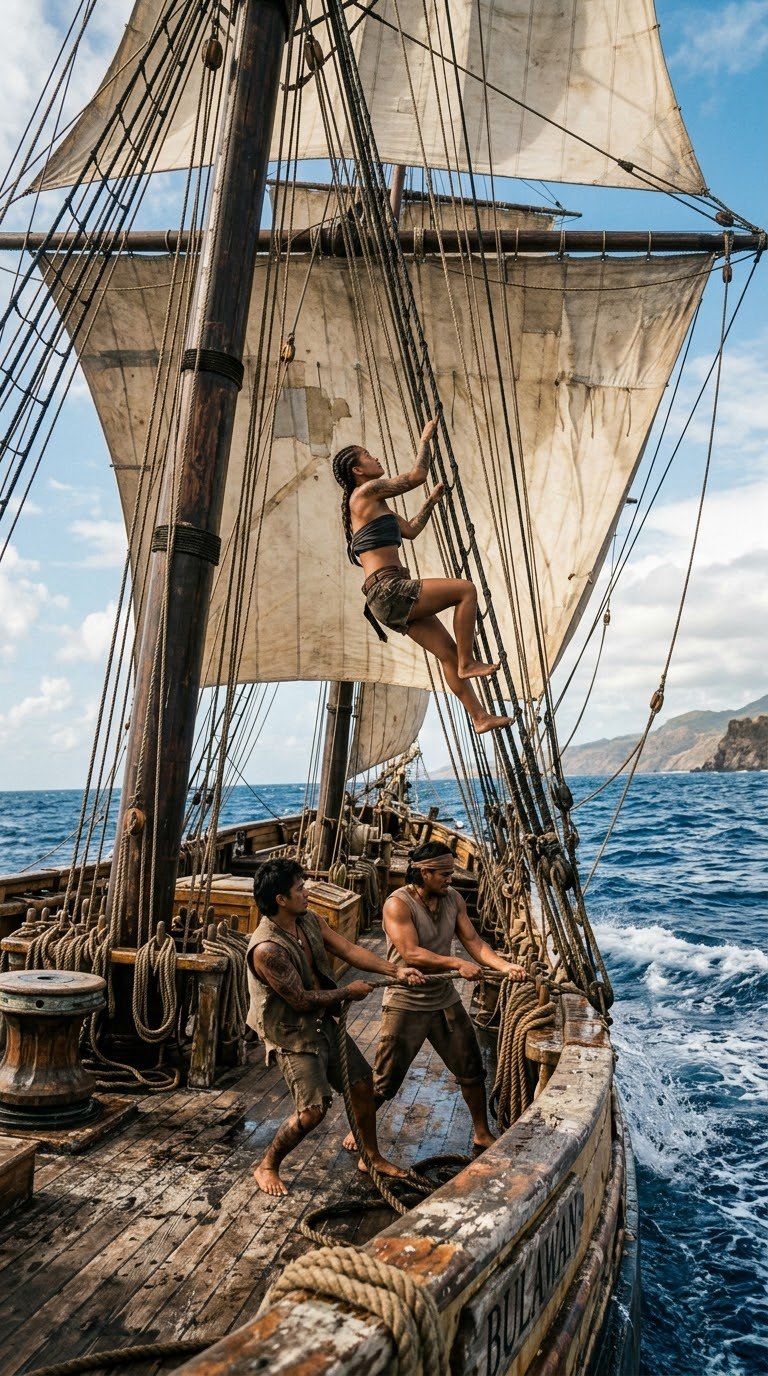
An Am’Ayim sailor knows their ship like most Innatraeans do their own mother. To Am’Ayim a ship is alive. They call it buhay ng barko, a ship’s life, and they mean it. Her timbers are bones, her rigging is sinew, and her sails are breath. Knock on her rail and she answers; stand on her deck at night, listen to wood and rope groaning against Di Saalt, and you’ll start to believe it too.
So they tend her like a healer does the sick. No rope that holds an Am’Ayim ship together goes to sea bare. Sailors wind string into the grooves between its strands, coat it in tar, wrap it in strips of canvas, tar it again, bind it tight in twine against the twist, and finish it with tar, varnish, and paint. I once watched a sailor spend an entire afternoon on a single length, her fingers black to the knuckle, and when I asked why, she laughed. “Yuh wrap har good, shi hold yuh good.” Every ship keeps a cat or two for the rats, and every crew spoils them shamelessly.
On an Am’Ayim deck, women and men work side by side, barefoot and shirtless in all weather, and no one thinks twice about it. A woman hauls the same lines as any man and climbs the same rigging. When a storm comes, the smallest and surest-footed climber goes up the mast with a hatchet in her teeth to cut the mainsail free before the wind can shred it. Crews call that sailor the rigging monkey, and the youngest who run powder to the cannons are the powder monkeys. Both names are said with pride.
Count the studs or rings in a sailor’s ear and you know their rank. A cabin boy swabbing the deck at dawn wears none. Each earring is earned and pressed into a sailor’s palm by their captain, and I’ve met grown sailors who could tell me the day, weather, and port where they received every one.
These crews are free women and men, and they’ll remind you of it. They follow a captain out of respect, and any of them may walk off at the next port if they choose. A good captain walks his deck from dawn to dark, tugging knots and eyeing sails, part father and warden to every soul aboard. Crews gather from across the isles and beyond, street children and shore children among them, and over the years a ship becomes their family. When a crew has sailed together long enough and survived because of each other, people start to whisper Yauhan ng Tadhana, a crew of destiny, in harbors where they have never docked.
Then there’s Ka’u Malihini Taumatau, guest right. Am’Ayim rarely speak of it, and few outsiders know to ask. A foreign passenger who requests it is promised fairness and protection for the whole voyage. The first time I heard a stranger ask, the sailors around me went still, looked at one another, and then kept that promise to the letter.
Am’Ayim are humble people before Di Saalt and boastful everywhere else. They race each other up the mast for nothing but a wager. They brawl on deck for the fun of it, which no captain allows under sail, though ashore most captains are laying bets of their own. On stormy nights below deck, they drink kava, the fiery Am’Ayim spirit, and play Shatranj on boards with pegged pieces that only sometimes stay put when the ship rolls. Beat the captain and another cup is yours.
When danger comes, a captain declares mataara. Every eye stays open, no one sleeps alone or walks a foreign street without a partner until the all-clear is given. It doesn’t stop an Am’Ayim crew from drinking. It only means they drink in one room, with knives close and someone sober by the door. On one such night I sat in a harbor inn while a whole crew sang an old sailing song, louder with every verse:
“Di Saalt she tek, Di Saalt she give,
But while wi sailing, wi ago live—”
Half of them couldn’t stand by the end, and every one of them still knew the words, even though I’ve heard they change between every crew and port.
Batok
Tattoos
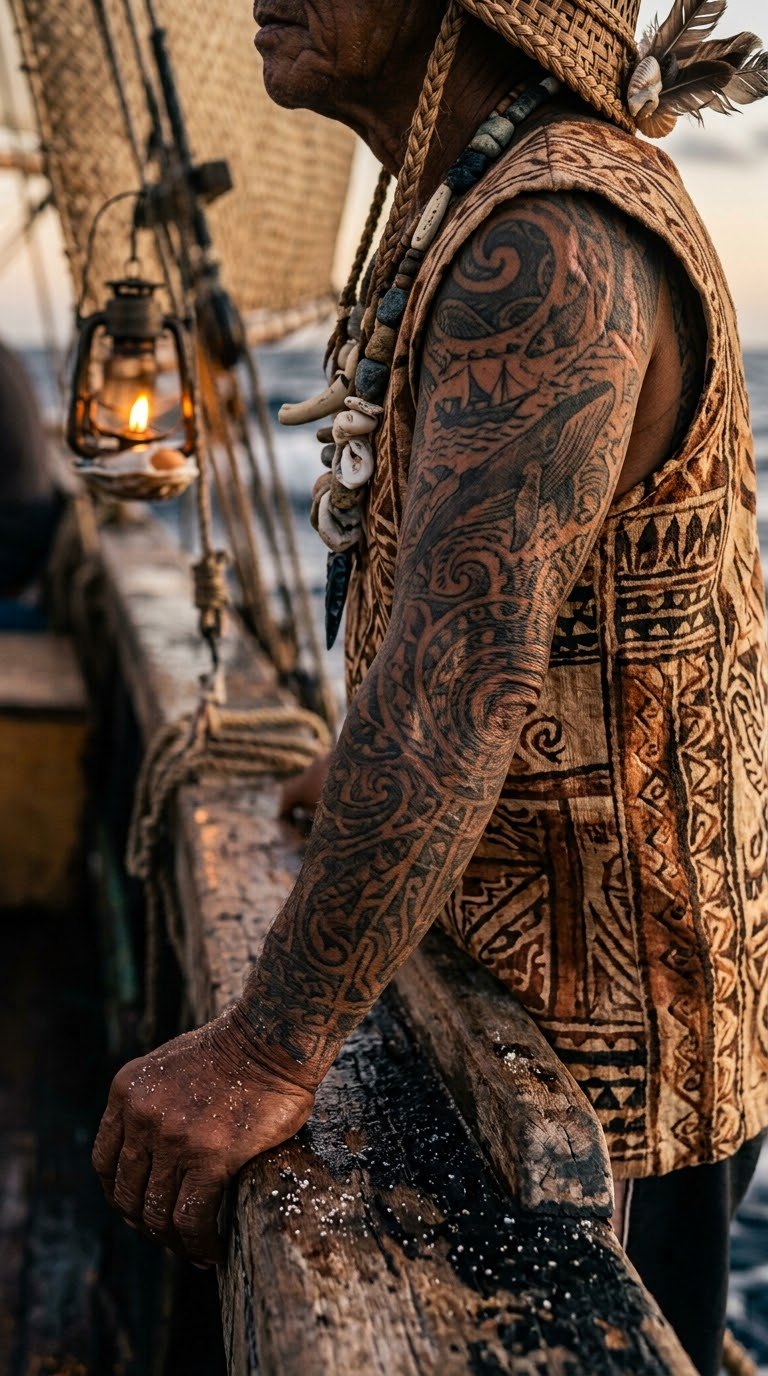
Look at any Am’Ayim sailor and you’ll see life written into their skin. Batok is their tradition of tattooing, and no mark is ever made for beauty alone. Every one remembers something they lived through, a person they loved, or a debt they owe. “Tattoo dem tell stori,” they say. “Every mark a memri weh Di Saalt cyaan neva tek away.” Every mark is a memory the Salt can never take.
The oldest and most honored marks are victories over Caim. Every time an Am’Ayim faces death and lives, they’ve beaten their god of death in a contest of strength, and that survival becomes living ink. A fall from the rigging, a ship lost beneath them, a storm that should have drowned them. Each earns its mark. Young sailors wear a few. Old ones are covered neck to feet, the newest marks crowding in wherever there’s room, until you can barely find the skin they were born with. Ask about any one of them and you’ll hear the whole story, usually more than once, and never told the same way twice.
Pain is the point. Am’Ayim sit for their ink without flinching, or at least they swear they do, and crews will spend a whole night in a harbor tavern mocking whoever squeezed a friend’s hand too hard under the needle. A mark bought cheaply means nothing. A mark that hurt is one Caim will see, and crews remember.
When a crew survives together, they share the ink, each of them choosing where it goes. I once sat with an old sailor in a harbor inn while he turned his arms in the lamplight, naming storms and wrecks and the friends who hadn’t come home from them. Near his elbow was the only bare patch of skin left. I asked what he was saving it for. “Di one mi nuh survive yet,” he said, and laughed until he coughed.
Not every mark is ink. Whakaute is a gesture of respect. Two fingers, the index and middle, touched briefly to the lips. A sailor offers it to a captain, their elders, and Babae ng Asin as they pass beneath her. To anyone they greatly admire or owe for kindness. It’s silent and quick, easy to miss if you aren’t watching. Once you are, you’ll see it everywhere, and learn a great deal about who an Am’Ayim truly respects by watching where their fingers go.
The highest honor they give creates legends out of those they deem heroes. Ngakau’to Asin, Heart of Salt, is given as an honor to people who faced death for others without being asked, and expected nothing back. In all my travels I’ve known it given only a handful of times, and each was spoken of like myth. Am’Ayim always pay their debts, and one like that is paid for life. A crew that owes one will follow its Heart of Salt into any water and mark that debt on their skin, so it can never be forgotten.
I’ve heard those few names sung in harbor taverns from the isles to Tursim. Each time, every Am’Ayim in the room touched two fingers to their lips before the next verse began.
Kali, Sayaw ng Kamatayan
The Fighting Arts

Am’Ayim children learn to fight like they swim, which many will tell you comes before even crawling. They are born into Di Saalt; for them fighting is a way of survival from birth.
Every harbor has its rings, a circle scratched in sand or chalked on stone. There you’ll find children circling each other, while their elders lounge nearby trading wagers and advice. Nobody stops a fight in the ring, until someone is bloodied or yields, or when a mother decides supper is more important.
Kali is the art most Am’Ayim carry with them, a fighting style built around a pair of short woven rattan sticks they call Sinawali. Once you’ve watched a master work you’ll understand the name. Their two sticks cross and recross so fast they blur, each strike and guard flowing into the next like water. Kali is taught with weapons first. A student learns the sticks, then the blade, and only later finds that their empty hands already know every angle, because they were following the sticks all along.
But the old teachers will tell you Kali begins below the knees. Children spend their first seasons stepping in triangles chalked on the ground, back and forth, forward and aside, until their feet move on their own and their teachers finally let them hold a stick. “Di feet first,” one told me, tapping my ankle with his stick until I moved. “Di hands only afta.” I’ve seen what that patience buys. A sailor trained in Kali can fight on a pitching deck, a narrow plank, or a rope’s breadth of rail, while a swordsman with twice the reach is still trying to find their feet.
There are deadlier things in the isles, though. One such is a matrilineal house of warriors respected across Innatraea.
House Masudo keeps its own art. Sayaw ng Kamatayan, the Dance of Death. It uses no weapons at all, only fists, elbows, knees, and feet, with a deadly grace that is terrifying to watch. Two Masudo women fighting look like a pair of storms colliding. They circle, test, feint, and then collapse into each other in a blur of strikes so fast you hear them more than see, flesh against bone, again and again, until all at once everything stops. One fist rests flat against an opponent’s body, and that stillness is the end of it. To Am’Ayim that killing strike, held back, is the most beautiful part.
The Dance passes from mother to daughter in the training ring, and nowhere else. A Masudo girl is put in the ring while other girls are still playing with dolls. They remember the day a girl first strikes her mother the way other families remember a first word. When a Masudo daughter wants something her mother won’t give, she can claim the right to challenge, and they settle it in the ring. The women of House Masudo have a creed they say comes from the Dance.
“Ang babaeng Masudo ay hindi umiiyak. Siya ay lumalaban. Siya ay dumudugo. Siya ay nagwawagi.
Masudo woman nuh cry. Shi fight. Shi bleed. Shi win.
A Masudo woman does not cry. She fights. She bleeds. She wins.”
Bundok ng Mga Reyna
The Stone of Queens

No single crown rules the Ara’Ayim Isles. Nearly every island governs in its own way. Some answer to old families, others to their elders, and a few, mostly in the south, answer to no one but their captains. Among them all, one house stands above the rest, and every Am’Ayim knows its name. Speak it in any harbor on Innatraea and you’ll watch sailors lower their voices.
House Masudo rules from Ni’Moku, and it’s ruled by women. Power belongs to its mothers and daughters, and passes only from one to the next. A son of the house is loved and raised in its halls, but he’ll never inherit so much as a fishing skiff. At the head of the house sits the Reyna, its queen. Her word is law on Ni’Moku, and carries across the isles and Innatraea’s ports. Masudo ships sail under the Imperial Hand, the House’s sigil, and pay no harbor master anything they don’t choose to.
A man can join House Masudo, though very few ever do. If he wins the heart of a Masudo woman, he’s accepted into the dynasty, takes the family name, and from that day any other wife he marries and every child he fathers belongs to the house as well. Am’Ayim will tell you fortunes have been spent, wars fought, and lives lost in pursuit of that honor. They’ll also tell you why so few men try. “Di Masudo uman a laik staam,” sailors say, and then spit over the rail. The Masudo women are like storms. You don’t sail those seas unless you want death.
At the northern end of Ni’Moku stands Bundok ng Mga Reyna, the Stone of Queens. A great stone dais overlooking the whole island, from its western coasts to its eastern bays. It’s the true seat of Masudo power. A new Reyna ascends there, Masudo marriages are blessed there, and the house’s mothers are honored there after death, before being sent into Di Saalt. Few men are ever allowed to set foot on it. Below, the house’s stronghold looks out over the Bay of Fish from a high balcony they call Bangin ng Tagak, Heron’s Rest.
When a Masudo woman gives birth to a daughter in the surf, the whole island waits. If the child is to be the next Reyna, she’s carried down to the docks and lifted into the wind while the crowd throws waling-waling blossoms over mother and daughter. From that moment she’s the Flower of Ni’Moku, heiress to House Masudo, and every Am’Ayim from the isles to Tursim will know of her birth before the signal towers have finished flashing.
On great occasions, the women of House Masudo wear the Korowai, a cloak of colored feathers passed down through generations of Reyna and their daughters. I’ve seen it only once, from a distance, but the feathers moved in the wind as if the cloak were still alive. Masudo women go bare-shouldered at home like any Am’Ayim, and their house mark is inked along their side for anyone to see. Once you’ve seen it, you’ll never mistake another woman for a Masudo.
There’s an old saying in the isles that Masudo sisters do not survive to grow old together. No one tells you why, and the Am’Ayim I asked changed the subject.
Sailing out of the Bay of Fish one evening, I looked back at the Stone of Queens and saw the shadowed silhouette of a lone woman at its edge, the setting sun behind her.
Pabaybayin
Shorebound
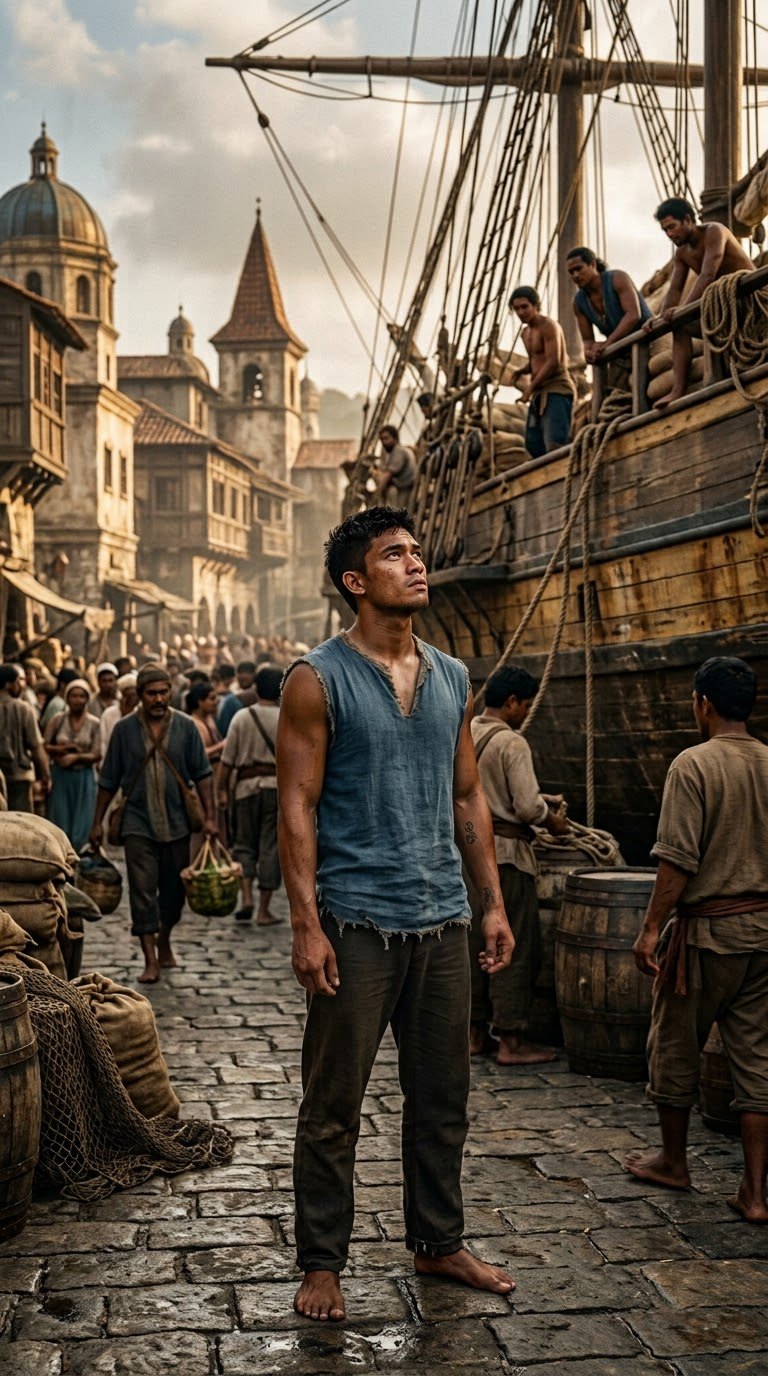
Am’Ayim believe a child born into the surf belongs to Di Saalt, body and soul. When they die, Di Saalt takes them home. A child born on land has no such promise. Their soul is pabaybayin, shorebound, tied to land, and to Am’Ayim that makes them weaker from their first breath. It’s not a kind word. An Am’Ayim born ashore in some foreign harbor carries it all their life, and few ever stop feeling its weight.
Yet Am’Ayim have spread across every coast on Innatraea, and shorebound children are born wherever they settle. In Tursim they have their own mahalle, tucked against the harbor where the city’s rules bend for foreign coins. In Kinrai there’s an Am’Ayim quarter, older than anyone there remembers. You’ll know you’ve found one by the waling-waling growing in pots on windowsills and the doorways painted island colors. Salty Talk drifts out of every open window. The children practice Kali footwork on chalk lines in the street while local children stop to laugh at them. In my experience the laughter doesn’t last past the first time one of them picks up a stick.
These places keep the old ways alive away from the isles. Elders there stand as Aratohu for families who couldn’t make the voyage home, and teach Tala ng Asin to children who’ve never seen the Woman of Salt. Kali masters pass the art on to anyone willing to start with their feet. In one Tursi inn favored by Am’Ayim crews, the rules are carved above the bar in Common, Salty Talk, and Tala ng Asin.
Pay your tab. Fight outside. Honor Di Saalt.
I’ve never seen a sailor break the third.
Ashore, Am’Ayim find their own ways to keep batok alive. Crews have favorite tattooists in ports across Innatraea, artists who know every Am’Ayim design and the meaning of each. Some sailors will wait months between voyages just to sit beneath one particular needle. The best are not always Am’Ayim themselves, and I’ve never heard a complaint about that. A good artist who honors the stories is worth more to them than blood.
Many Am’Ayim sailors keep families in more than one port, a wife in the isles and another in a harbor city half the world away. Outsiders find it strange, but to Am’Ayim it’s a simple fact of life. A sailor’s heart doesn’t stay in one place any more than they do. The children of those foreign ports are the ones who pay for it. They grow up on land more often than not, Am’Ayim in blood and shorebound in soul. Many spend their whole lives trying to prove Di Saalt was wrong about them. I’ve watched one of them walk up a gangplank and ask a captain for the chance, with every sailor on deck staring down at him.
Am’Ayim walk foreign streets as they walk their own decks, shoulders bare and heads high, indifferent to the stares. In cities where women hide their faces, Am’Ayim women stride through the markets, captain ships, and haggle with harbor masters as equals. I’ve watched local women follow them with their eyes long after they’ve passed.
In Tursim’s Ay’Ayim mahalle I met an old sailor who hadn’t set foot on a deck in decades. His legs couldn’t manage it anymore. Every evening he still walked down to the end of the quay and stood there until the last sails of the day had disappeared over Khalij Alshams.
Manawa
Breathe
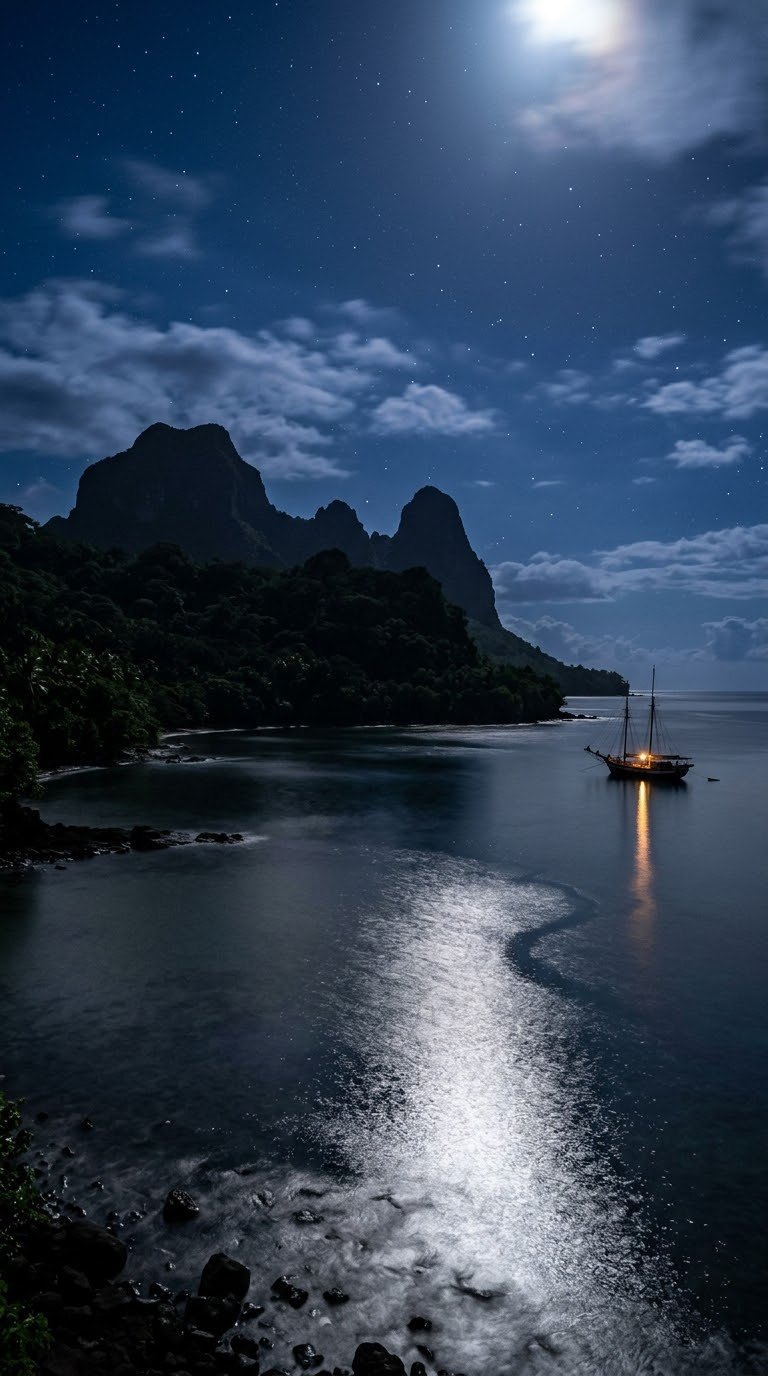
When the last line is coiled and the watch is set, an Am’Ayim officer calls a single word down the deck. Manawa. Breathe. The work is done and it’s time to rest. No sailor argues. Hammocks fill, paipas are lit, haze flower smoke drifts over the rail, and someone always finds a drum.
Am’Ayim rest the same way they work and fight, wholeheartedly and all at once. Di Saalt taught them long ago that the calm between storms never lasts long, so they celebrate life harder than most.
On my last night aboard an Am’Ayim ship, I stood at the rail long after the others had gone below, watching the stars over a black and quiet sea. The quartermaster found me there. She pressed a cup of kava into my hand, looked out at the water beside me for a while, and then spoke the old words softly, the way you’d say them to a child:
“Okioki toa, mo apopo te tupuhi.”
Rest, hero, for tomorrow the storm comes.
I went below and slept better than I had in years, with Di Saalt rocking the hull beneath me.